The Masterpiece edition omits the afterword pages, which is a bit sad…


Nope, not those either.
Oh, yes I know ^^ I’ve been there! It was lovely 
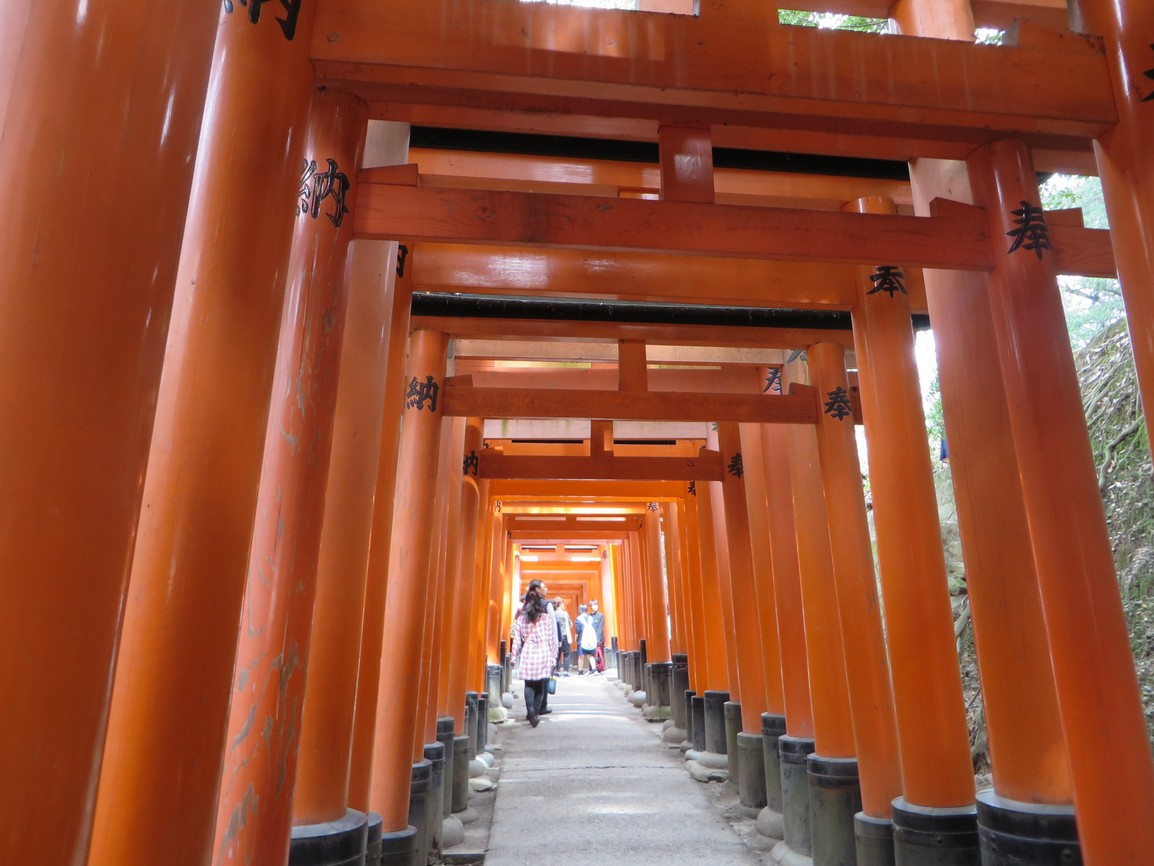
Hope you don’t mind if I shamelessly steal your idea xD I only have the first half of the chapter, though. I didn’t go all the way up, and I didn’t take very good photos of the more forest-y part.
I tried.jpg
pg 125

pg 126 - our kitsune friend

pg 131

pg 132
pg 133

pg 134 middle

pg 135

If you’re wondering how many pictures of the Torii gates I took, the answer is…a lot.
But those super head-on angles shown in the manga are hard to get in real life. (Or I just didn’t like taking shots from that angle. One of those.)
Aye, I went halfway up on my first visit in 2010 - coincidentally, pretty much where Akari is on page 139 (though I went a little bit past there just to see what it looked like) - but none of my photos are particularly good. Pretty blurry.
Went again on my last trip in April, and they were having the Shinko festival, so I didn’t go very far up. Didn’t want to get too far from the main courtyard where the festival was taking place.
On a side note, the thing “our kitsune friend” is holding in his mouth is the key to the granary.
Did anyone else like the colour panels at the start of the chapter!?
And does this mean that kitsune sama selected Akari as 嫁入り?
Or is it just mischief?
I’ve been to Fushimi Inari once but it super crowded when I was there. It was kind of a relief to go for a walk in the nearby bamboo grove.
I think it’s more about the bride to be in the procession.
What nearby bamboo grove?
Alternately, just head up the mountain instead. Once you get past the first inner shrine, the crowds pretty much vanish. 
Unless my memory is going, I thought it was Arashiyama.
A few years ago I went to the Gekkeikan sake brewery, the Fushimi Inari shrine and Arashiyama bamboo grove in one day I think.
Arashiyama is, quite literally, the opposite side of Kyoto. I mean, it’s only a half-hour’s drive, so it’s plausible to visit in the same day, but I’d hesitate to use the word “nearby”.
So, I was trying to work out what 秋本番 means, from the very first panel on page 121. Jisho doesn’t have an entry for it, but the second definition for 本番 (don’t look at the third, oh my) is “game, season, crucial moment”.
Those actually seem quite different from each other! So is it just something like “the season of Autumn”, or more like “the heart of Autumn”, or… any other suggestions?
Also, on page 155, in the very last panel… what does ひっとしたら actually mean, here? And is that strange illuminated bubble supposed to be highlighting something in the panel, or is it just supposed to look… ethereal or something?! The statue keeps changing orientation throughout those panels, which made me very confused when I was reading it 
I don’t know what 秋本番 is. But I basically came to the same conclusion as you.
I learned 本番 from the 10k deck. They defined it as “real performance, take”.
And in the example sentence
彼女は本番に強い
“she is always good when it comes to the real thing.”
I have a hunch that it is when autumn is the autumnest. When autumn really show you what it’s got. “the heart of Autumn”, sounds fine to me. But this is just guessing. We’ll see if someone else chimes in.
I assume you mean ひょっとしたら. That’s what my copy says.
My dictionary says “possibly, by some possibility, perhaps”. If I was in charge of the english version I would have translated it to “could it possibly be…(the lunch box i gave to the fox kid)”.
I didn’t notice the illuminated bubble until now. I probably thought it was just lens flare or something  It appears to me that something is supposed to be there, but isn’t anymore. Why else would they mark that region. But I don’t know what’s missing, so I’ll stick to the lens flare theory
Yeah, that’s the gist of what I was thinking as well. Glad to know someone else came to the same conclusion, even if we are both guessing  inferring meaning is important too! this is where we find out we’re horribly wrong
Aaah, that’s probably why I didn’t pick anything up when I had a look thank you, that makes total sense for the context!
Well that’s all I can really think too!
Not Arashiyama then, but there is a bamboo grove nearby. link
Three questions so far.
- Is page 124 basically saying that there are these small islands that have their own little cultures based on the countries they emigrated from?
- On page 128, what are the extra はs in the verbs doing? There’s 来はった and 現れはる. It looks like the は is just thrown in to 来た and 現れる for dialectal reasons?

EDIT: Plus 気を付けなはれ on the next page, which seems like it’s equivalent to 気を付けなさい. - I more or less followed the old lady’s explanation on page 129, but does やさかい mean in panel three?
EDIT: Actually, maybe I figured it out. やさかい = だから?
Basically. The new settlers were each assigned an island (based on which country they came from) where they built a cultural village. The impression I get from this is that they were specifically constructed as museums from the beginning (like Edomura, kinda thing) - ADV’s translation always gave me the impression that they’d originally lived on those islands until being moved to Neo Venezia itself.
It’s dialect. Dem crazy Kyotoites. ~はる=~ます
Yep, that’s it. だ→や and から→さかい
In Hiroshima dialect, it’s だ→じゃ and から→け, and so だから becomes じゃけ, which never fails to trip me up.
And that’s why I never understand a thing when I go around those parts…
Wait, that’s the polite form? Man, dialects are weird.
I more or less understood the intended meaning without reading this explanation, but I wanted to understand it better. Since the sentence ends in て form, it feels like something is being left unsaid. For example, I think it could instead have been 手までつないでもらっとけば(よかった) to mean that it would have been good if Alicia had taken her hand (in advance) this time. So what is the thing left unsaid with the actual text ending with て?
@Belthazar Also, do you know if this chapter was adapted in the anime? I’d love to watch this episode.
I see what you mean, but it doesn’t work here because they were holding hands (but still got separated).
It could have worked with もらっておいたのに though.
Because of the て form, it makes me feel like she wants to add more stuff that Alicia has done as well.