The first part is Shikimori. The second part is Izumi. The first part is a continuation of her previous statement. She’s saying he doesn’t need to apologize, since this is just the same kind of thing that always happens.
The second part is Izumi protesting that it’s pathetic that he is protected by her all the time.
Super nitpicky, but the subject is not the classmates themselves, but that they teased him. I would translate it as something like “Are you thinking about what our classmates said yesterday [that you shouldn’t cause trouble for me]?” She suspects that is why he is being so down on himself for being protected all the time.
The first part continues from what Shikimori was saying. “Ugh… But they were right [literally “it was a true thing”, referring to what the classmates were saying]. I haven’t been able to do anything for you. If this keeps up, I…”
今日結構空いてきますね - “it’s emptying beautifully”? Is it a comment on the weather?
あの映画見ません - Is this a suggestion to watch the movie together? Why is this entire conversation in the polite form?
p22
ホラーって平気ですか?- So nice to encounter the word 平気 that I learned in WK just this week! What does it mean here? Is it like the English “would you be cool with a horror movie”?
よかった - I thought it meant “this was nice”, but as they haven’t watched the movie yet, is it not really past? What form is it then?
一番怖かった - it was the scariest thing
今年見た - I saw this year
What 中で? Is it something like “throughout this year”, similarly to 年中?
男らしさってヤツ発揮できるのでは - I understood all the words, but what is the meaning that the のでは particles add?
結構 is the ‘very’/‘fairly’ usage.
すいています = 空く = ‘empty’, ‘not crowded’.
‘It’s pretty empty, isn’t it?’
Because they’re on a date but they’re not totally sure where they stand yet (at least, Izumi isn’t).
Yes, exactly. In an earlier chapter the students escaping Shikimori’s wrath went 'へいき’ - this is a roughly similar usage (‘safe’).
I don’t really know about form, but this is her saying ‘oh that’s great [my choice is good]’. So it’s more like relief. This is a pretty common expression.
I’ll leave the bit addressed to Gorbit for Gorbit lest I be Gorbeaten
結構 means “quite/very”, and 空いてきます is 空く+て+くる or “came to be empty”, or in this case, since this is a public building “not crowded”. Essentially “[The cinema] is quite empty today”
She’s omitting a か from the end (a common I believe specifically female speech pattern). She’s asking "Should we watch *that* movie?.
They tend to speak politely with each other.
p22
Pretty much
It is the past form, but “よかった” in general is used as “yay!” “i did it” “hurray” “I’m glad” and so on. She’s happy that he agreed to it.
You missed one crucial detail that would make this easier to understand. Which is that “今年見た” is probably missing a の or something after it (blame it on being twitter), it’s “The things I’ve seen this year”. After that the 中 takes on a very literal meaning of “inside”, “inside the things I’ve seen this year”, or in proper English. “out of the things I’ve seen this year, this was the scariest”.
I’m not 100% on this, but I believe the で there is just the te form of だ and は is there to add emphasis to it. Finally the の is there to nominalize the sentence, so the では part can be added to it, since otherwise it’d have 2 verbs.
Those weren’t addressed to me, they are just quoting the handwritten text transcripts
You’re lucky that I wanted to do some research on that last question, otherwise your work would have been all for naught
Another nice week. Short chapters make for a low barrier to read, it feels like a low committment (relative to books with longer chapters) and the two chapter-pace was very doable for me.
The characters are nice as well, and I’m getting into the drawing style more and more. I can’t help but feel along for Izumi-san, who’s trying really hard.
p.24, handwritten text. Could use some help...
まさかここまで怖がるとは
I have trouble making sense out of this sentence. Maybe that’s the point, given his state of mind? It reads to me like a half-sentence, that ends after a quotation and topic marker.
It went pretty well for this part but sometimes, when I get into details, I find myself a little lost
p.22
男らしさってヤツ発揮できるのでは
I understand something like : “It’s an opportunity to show my manly side”, but what’s さって ?
And what’s the meaning of きる here ?
p.24
彼氏力で負けている気しかしない
I can’t really crack this phrase… Especially, I don’t understand the end 気しかしない
“The power of boyfriend is defeated not only in mind” ?
the さ form of い verbs converts them into a noun
長い = long → 長さ → length
可愛い = cute → 可愛さ → cuteness
男らしい = manly → 男らしさ = manliness
That’s できる, “to be able to”
p24
彼氏力 = boyfriend power = here essentially “boyfriend quality”
で = here “at”
負けている = to be losing
気しかしない is essentially an even more powerful version of 気[が]する, “to feel like x”. You can think of it as “I feel *only* x” since the しか + negative form.
So essentially “I feel like I’m losing my boyfriend quality”, or with more natural English “I feel like I’m bad at being a boyfriend”
For 彼氏力で負けている気しかしない, I would say it’s not just that he is bad at being a boyfriend. He is losing in terms of boyfriend power to Shikimori. In other words, she’s better at being a boyfriend than he is The opening theme of the anime also has this theme. It goes something like “なんか僕よりも彼氏みたい”, or “It kind of seems like you’re more of a boyfriend than I am”
OK, I made my way through the Chapter 4 - lots of interesting stuff! I found this phrase quite surprising:
p. 22
“確かツイッターで怖いって話題になってたやつだ!”
While I know the theory for the -tte casual quotation marker from Bunpro, I had no idea one can use it like that, with some vague idea from Twitter and without any actual quote.
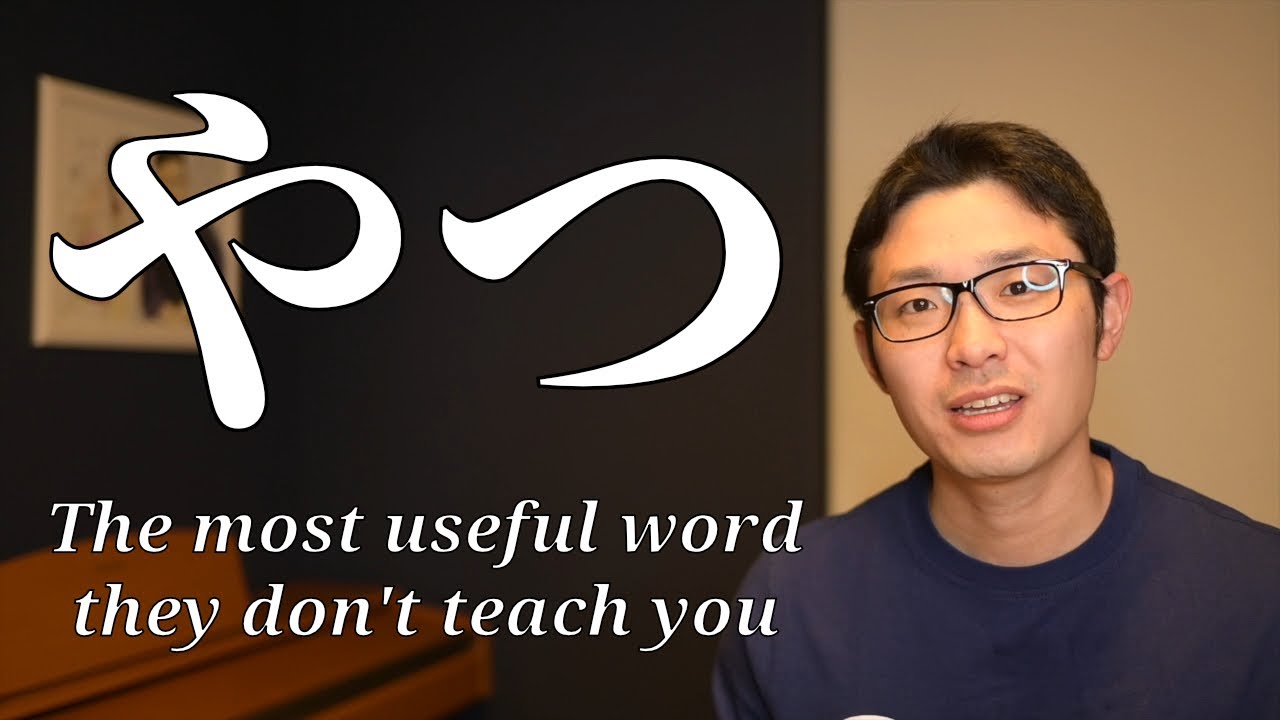
Apart from that, the vocab chart seems a little misleading here, as “やつ” seems to mean “thing” here, and not “fellow; guy; chap;” (as per the meaning 2 of this entry: yatsu) - would it make sense to correct/add a comment to the chart? I would prefer not to tamper with it without asking first, given my lack of experience.
Thanks, I didn’t know this channel and it looks like there might be answers to some of the questions that are pestering me. I love how he speaks natural, full-speed Japanese, not slowing down to make it more beginner-friendly, but artificial.
 Is it a comment on the weather?


 I love how he speaks natural, full-speed Japanese, not slowing down to make it more beginner-friendly, but artificial.