Copying the explanations from the other topic in case someone else has the same questions later.
にぎやかな
And for the other questions:
Yes, いつも means always, but you’ll usually see it written in hiragana anyways.
Passive voice
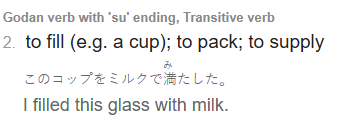
It’s the second meaning of 満たす listed on jisho:
カレンのまわりはいつも、
Karen’s surroundings always
にぎやかなわらいごえで
With lively laughing voices
みたされていました。
Were filled
The いる here is the ている form indicating continuity.
Together:
Karen’s surroundings were always filled with the lively sounds of laughing voices.
される here indicates passive voice. We have active vs passive voice in English too, consider the difference between:
I filled Karen’s surroundings with lively voices.
Karen’s surroundings were filled with lively voices.
In the first sentence, the subject, me, was doing the filling, creating the active voice. In the second sentence, the subject is Karen, and the ‘doing’ of the filling action is done by an unseen actor, creating passive voice.
More active/passive sentences in English:
My dog bit me. (active)
I was bitten by my dog (passive)
I wrote an essay. (active)
The essay was written by me. (passive)
I washed my car. (active)
My car was washed. (passive)