Into the ‘painful’ levels while living in Japan~

Hey everyone, this is my second topic ever on wk forums—hoping that I can contribute to the coolness here.

I started WK after doing language school in Tokyo two summers ago. Im level 11 now and felt like I have found my groove with the app thus far.

There was a point where i stopped doing a default number of lessons and started picking them on my own. This all depended on how I was feeling that day. If you’re curious, you have to set that number to 0 and use the advanced lesson picker.

This was crucial for me maintaining balance, at the time, between online language school, bunpro, wk, and prepping to move to Japan. I stuck with it since. It just feels right with the way I work.

I started messing around with review order–went from level order back to interweave–and extra study. I found that I like doing recent lessons from time to time. I also started writing my own mnemonics in the reading/meaning notes and reading the example sentences for vocab.

My mnemonic for 南国 (なんごく) :parrot:

After relocating to Japan to work as an ALT, I contemplated dropping wk to learn kanji overall faster. But the knowledge i accrued from wk (I was level 5 when I got here!) was proving useful in my day to day life.

Im hoping to get to at least level 20 this year. It shouldn’t be an issue but I may cut back on time on wk to devote it to online language school again and jlpt prep. Work can be a lot too, where I’m with a lot of youth and my whole day is mostly in Japanese.

Hoping to post some things from my environment and update this thread weekly too!

9 Likes

If you don’t mind writing about it, it would be interesting hearing about your experiences at the language school.

1 Like

For sure, thanks for asking.

I went to a language school in Shinjuku, Tokyo for a little under 3 months. We covered almost all of N5. Can’t lie though, I paid a pretty penny for it. My invoice for tuition was 211,700 円 and after wiring the money I paid 1,451.21 USD plus fees. This did not include boarding, food, etc. which should be another 2,000 in USD if you want to be comfortable in a city like Tokyo. Things come up. You want to participate in outings with friends. You’ll want to buy things to take home.

It is definitely an experience I cherish and don’t regret though. I caught the ‘bug’ for being in Japan after my first two trips ever to Japan in 2023, I had to find out if I could personally be ok living there. Side note, had an interest in Japanese culture since childhood and even wanted to major in Japanese during university but that didn’t work out–Japan related endeavors worked out better at this point in my life though.

Language school is definitely the way to go to learn Japanese at a fast paced in a structured environment. I self studied after returning to the US fall 2024 and missed the accountability of having to answer to a teacher, working alongside classmates (trying to one up them in a friendly kind of way) and having things graded.

However, I got the sense that language schools are geared towards prepping you for the JLPT unless otherwise mentioned. This makes sense imo as their sponsoring a lot of visas for their students and it probably looks better from a bureaucratic point of view.

After coming back from Japan, I was exposed to other ways Japanese folks say things during my self studying. Also, there’s a good amount of writing during language school that I stopped once I came back home.

Another the thing to consider is your interactions with classmates. I had really special memories and friendships with my classmates but have also seen they’re not so friendly sides. This was between other classmates and sometimes staff too.

I was older than a lot of them so I didn’t judge them too much. We paid a lot to be out here and a lot of us were meeting people from other countries for the first time. Back in the US, my friendships are diverse but during language school I definitely felt I was US centric and uninformed about elsewhere.

I know it’s a lengthy post, I hope you find some useful bits in here! I’ll say there are cheaper alternatives too. You can look in other cities but they probably won’t be that much cheaper. You can definitely do language school online or classes in your home country for cheaper. You could also book a decently length-ed trip to Japan and do your best immersing yourself firsthand.

5 Likes

I too am an older learner compared with what seems to be the predominant age range that I’ve seen in my research - and might find it a bit awkward to be treated like a younger student would be.

Lately I’ve been watching a number of videos that address limitations and/or problems with many of those schools.

I don’t need to pass any particular level of the JLPT, although in my self-study I find that N3 materials offer a convenient yardstick for guiding my work. Also, I understand the underlying reality that tends to force many of the schools to strongly link their course offerings toward passing the various test levels.

In fact, I’d probably be more interested in finding courses that are geared more towards conversation, and less toward passing written tests.

I’ve also contemplated using language school as a ‘proxy’ for simply living in Japan beyond the bounds of a tourist visa.

But as I’m currently working full-time, it may not be possible anytime soon for me to realize that goal.

1 Like

I still think having the goal will help shift things in that direction though. I left my last job with language school as my exit strategy. Maybe you’ve got things good–work setup I mean–and are able to do a leave of absence with work?

I’m in my mid thirties and did meet several folks who seemed my age or older. Being that my class was for N5 though a lot of my classmates were in their twenties. I think that would be mitigated for in higher level classes. Less folks doing it for a study abroad kind of experience and more for bigger stakes. Rooting for you

2 Likes

Getting closer to the halfway point of the intro grammar exercises (edit: skills development part 1), before the comprehensive stuff, of the shinkanzen master n4 grammar vocab book.

Saw this at the grocery store. We know the kanji for sure! Def had to look up the reading

More of my mnemonics:

歩道

必勝

I’m working through Level 15 now and also living in Japan. I also attend a Japanese language school twice a week in Ikebukuro. But I know I still have a long way to go to my goal, which is N3 for now.

It would be nice to regularly chat with someone in Japanese, per my teacher’s advice. :smiley:

頑張りましょうね!:slight_smile:

1 Like

Let’s go!! I think N3 is a good place to be proficiency wise living out here. It’s kind of arbitrary saying where you’re at Japanese-level wise with JLPT levels, but I can understand 40%-60% of what’s going on at work being at N4 level.

配る

最近、配るの言葉をワニカニで習いました。今日、「給食を配る人」と聞いてわかりました!

さいきん、くばるのことばをワニカニでならいました。きょう、「きゅうしょくをくばるひと」ときいてわかりました!

What I hope I wrote:

Recently, I learned to the word for to distribute through Wanikani. Today, I heard “people that are [giving out] school lunch” and understood it!

40%~60% is great!
I don’t think I’m at that level yet. いいな。。。:wink:

it’s totally ok! Keep it going. I think it’s dope you’re at lvl 15 and are in language school, I totally didn’t prioritize kanji when I was at the tokyo language school.

It’ll come with time. I’m talking about just being able to communicate with the language. Studying it can make it seem like math but it’s a form of communication. I hear so many variations and ‘rules’ being broken. I’m sure it’s the same for English learners

Made it to level 12 よっしゃー!!

I am near page 60 of shin kanzen master N4. This is a little over half way of the grammar introduction stuff.

I’m on the last story from NPO Japanese Graded Readers Level 2 volume 1.

Native content… for fifth graders in elementary school? We can understand this!

3 Likes

I’ve got a lot of vocab to catch up on from level 11 that I want to finish before working on the next level’s radicals, kanji, and vocab. I’ve switched my item order to apprentice first and am using the wrap up feature to make sure my progress counts during my short burst review sessions.

Honestly, being out here, I personally feel like slow and steady definitely wins the race. You can speed run to a higher JLPT level but when it comes it, and native speakers say something let’s say N5 level but in a different way than you learned, you might be like wtf. I’m cool with building a solid foundation before moving forward

Another mnemonic of mine. Sometimes I gotta do this to remember it xD

足し算

edit: another one. I do have a friend named Kyle!

開始

For my past few levels on wk I got away with focusing on kanji and radicals. I would do the vocab on the side and catch up with those by the next level butttt

Hitting level 12 I had more than 150 vocab from level 11 I didn’t finish. I’m down to 75~ now, big thanks to Tsurukame on iOS.

Here is some kanji I’ve seen out in the wild here:

At level 12, most of this blue sign on the left is understandable. I’ve seen 込み in N4 vocab and the third kanji after 土 日, in the orange part of that sign, on other schedules for holidays (祝日).

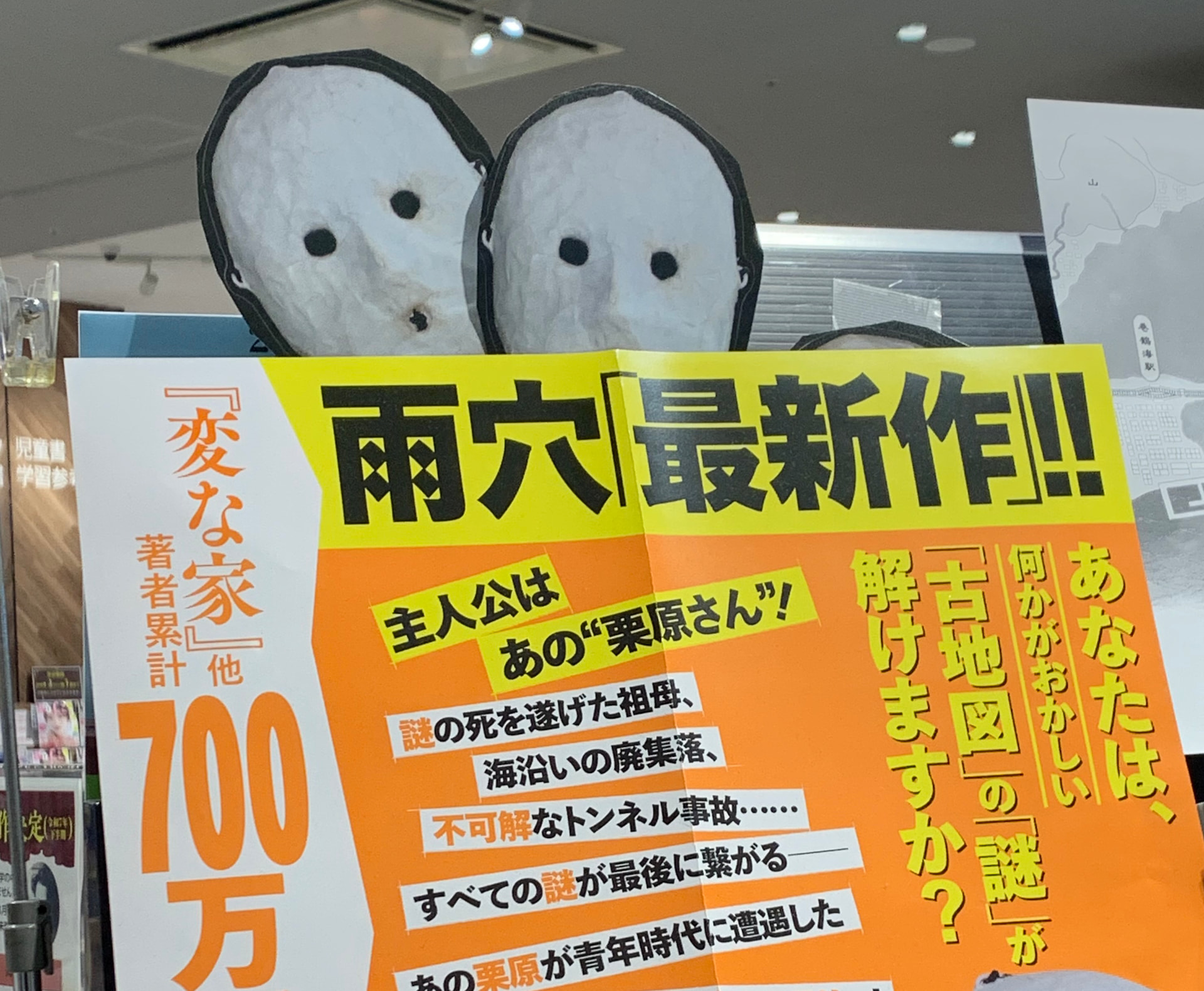
Not sure what 雨穴「最新作」meant when I saw it but I know these char for sure.

Just looked it up lol xDD

1 Like

For others who might not know (うけつ):
Author (変な series、e.g. 変な家) and strange YouTuber guy. One of my Japanese friends is totally obsessed with him.

2 Likes

It’s late here so I don’t want to watch any of his vids before going to bed. Plan on checking tomorrow

Thank you for sharing your experience with us!

If you don’t mind, I would also like to hear about your experience working as ALT in Japan.

From what I’ve heard, this might be one of the most popular opportunities for native English speakers to work in Japan. Have you though, ever encountered non-native speakers teaching as well?