Oh, nice! I’m glad I wasn’t entirely wrong. I’ve been trying to learn Japanese for 5 years now, and I was feeling so annoyed at myself that all this time I potentially kept such a mistake
I was trying to think where I got it in my head that ぬう was two distinctive sounds. I think it stems from Italian (my native language), where we don’t really have long sounds where two same letters are next to each other.
For example, “addii” (‘goodbyes’) is pretty much pronounced “addi-i” (the last ‘i’ is differentiated, albeit slightly. But it’s definitely not the first ‘i’ lengthened in sound). 「あっでぃ-い」
WaniKani will explain how to reproduce the sounds… when you’ll get to vocabulary lessons that cover the newly learnt kanji, there’s audio for each item with both female and male voices (real humans, not AI).
Am I right in thinking you are not an English native speaker?
If that is so, I think you might be referring to a problem I’ve run into with these pronunciation mnemonics.
It’s hard to explain, but I think it’s because like Japanese, my own language is phonetic and then in my ESL mind “new” is always n-e-w (the written form) not n-i-u-u (the spoken form), so yeah it’s hard to associate the pronunciation of にゅう with the given English written equivalent “new” for the kanji.
It gets even weirder with stuff like ‘kaku’ that to me make no sense at all
But the good news is: once you get through a few (tons of?) items this really won’t be a problem anymore, you get used to their way of composing the mnemonics
Or, you can always make your own better suited mnemonics
That’s precisely how WaniKani operates, except that instead of “after level 4 or 5”, it’s “before level 1”. You will learn only in Hiragana beginning with level 1. Mentally prepare yourself to use Hiragana from the beginning. I’d estimate it would take less than a week.
Ah so we’re back at square one - as others have pointed out already, when you start WK you should already know how to type (in romaji) so that the IME produces the correct hiragana.
Disagree on the need to have romaji with WK, though. I know in the early days it’s very useful to rely on romaji, but give it a few days/weeks to get used to hiragana and katakana (and later kanji) and you’ll eventually grow to despise romaji, as it just makes things confusing.
Nowadays if I see something written in romaji I have quite a hard time figuring out what it’s actually supposed to be… but maybe that’s just me
No.
But WK is not a library, its purpose is not to give you things to read, but to drill you.
That means, it is needed to check you acquired what it teaches, for that the system needs back your input. And input in writing is way easier to do (not only for WK, but also for users, the failure rate will be significantly higher if learners had to actually utter the correct sounds).
Also, hiragana can be ready too.
And Japanese text can be in kanji or kana, you can’t predict what some text will actually use, so you need to know both anyway.
So, even if you could reply to quizzes with voice (btw, there is a user script that does that, actually. Or you can, in a smartphone, use voice input in Japanese mode), the need to teach the kana spelling is actually a core part of the learning to read.
No.
You are required to enter にゅう (not even ニュウ is accepted).
It just happens that the site is kind enough to implement and offer a standard latin-to-kana input method engine for those not having a Japanese IME in there devices.
So you can type n-y-u-u, or n-i-x-y-u-u and get にゅう ( note on some cases IME types diverges quite a lot from romaji romanisation. The most straightforward way to enter pâtî (パーティー) on keyboard is: pa-texi ).
And WK does tell both about hiragana being a prerequisite, and how to learn it.
Go to “help” section, follow prerequisites, it clearly says that while it is not needed for “radicals”, you need hiragana for kanji and words. And it gives a link where you can learn it.
Frankly speaking, starting wanikani without knowing about hiragana, basic grammar, and a rough idea of Japanese language history (where the different systems came from, on/Kun, etc) would be like wanting to learn English without knowing about latin script, alphabetic order, upper/lowercase or punctuation.
Yes Genki and other Japanese language learning methods do include those info in their beginning.
But WK is not a “Japanese language” learning tool, but a tool to learn some aspects of the language.
In particular it doesn’t teach kana, nor grammar, nor even writing for that matter.
Other tools exist. The same company behind WK do have material addressing some of them (in particular kana).
I’m confused as to why you want to learn how to read kanji but not kana.
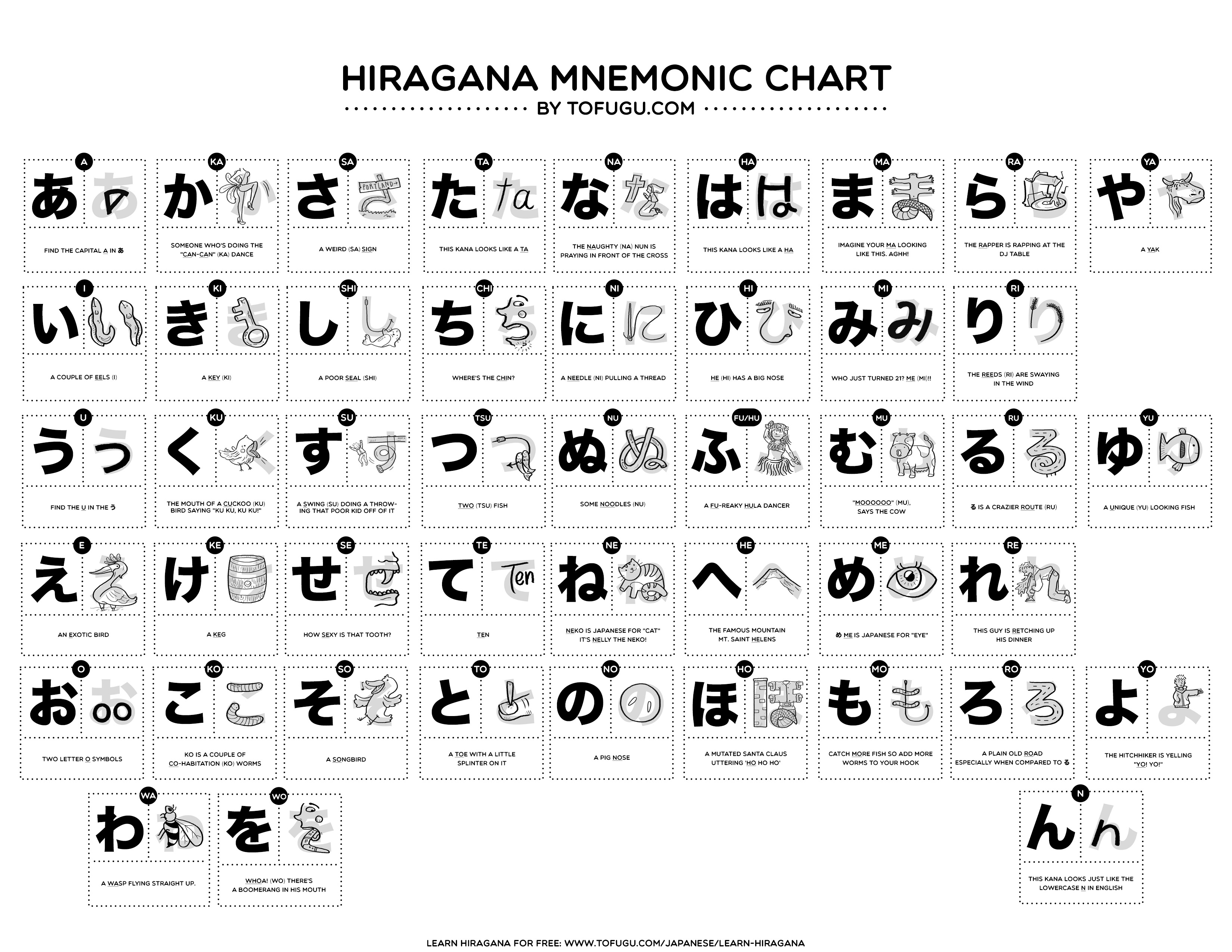
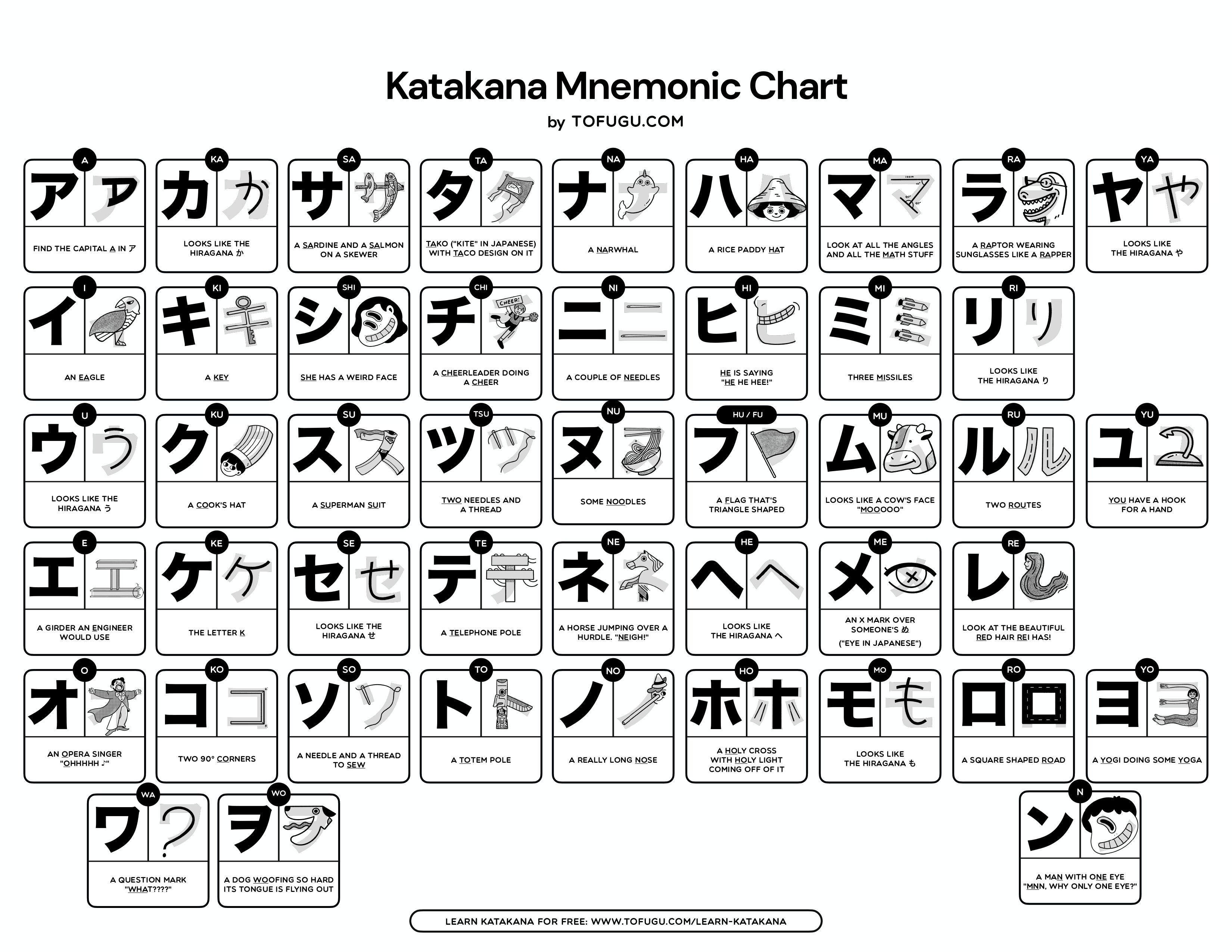
Maybe spend a week learning the kana before using WK (or any learning app really). Just keep a browser tab open with realkana and quiz yourself whenever you have a few minutes. Tofugu has mnemonic charts for hiragana and katakana.
I think it needs to be more definite about it, though. The Knowledge guide’s answer to “Does WaniKani have any prerequisites?” is more like “No, not at all… but you’ll need to know hiragana, though.”
Because romaji is a crutch. It adds ambiguity. And it’s assumed that you’re already past that stage.
Also, let’s say WaniKani does use romaji until level 4. But… what changed between level 3 and level 4 that suddenly means users can write in hiragana? WaniKani doesn’t teach the hiragana, so why is level 4 a better place to start with hiragana than level 1 was? Either way, you’ve still gotta learn the hiragana somewhere.
I didn’t struggle. It’s not a struggle. Just learn it. Get some flash cards, sit down, and learn it. It’ll take you a couple of hours.
No, it’s to teach kanji. If the goal were truly to help people find their love of Japanese, then it’s spectacularly bad at it.
Wanikani is not a resource for beginners, so it doesn’t cater to beginners very well. You are going to need to use other resources, unless your goal is only to recognise the occasional kanji.
The learning path is supposed to be : romaji > hiragana > katakana > kanji
( natives learn it katakana > hiragana > kanji > romaji btw)
So, clearly if at the step of learning 漢字 you are already supposed to know ひらがな
Wanting to learn 漢字 without knowing 平仮名 is just very strange.
And with exception of some road signs and such, you won’t be able to fully read a single Japanese sentence, even if you knew 15,000 kanji, without kana.
I second that this looks like LLM output. The remaining question being if the user has asked into the prompt to be contradictory and hostile on purpose to sow dissent.
I wonder if its like training wheels to see how this kind of bot is efficient on discourses forums in general. We had at least two other profiles recently that were very suspicious.