Can someone explain an effective learning workflow?

Brand new to this, and I was impressed by Wanikani for learning Particals, but for learning Kanji I am finding it almost useless and feel my time is being wasted. I assume I am missing something as so many rave on the effectiveness of Wanikani

  • The mnemonics are often very misleading,
  • the reviews and quizzes cycle through wrong answers so its very difficult to remember your last mistake on a given kanji the next time it cycles around.
  • I have spend hours just trying to pass and review lesson one and don’t really think I’ve learned anything.
  • Eventually I will just pick a kanji I get wrong, memorize the pattern to put in, then just put that in over and over in the lesson getting everything wrong and paying no attention to it until it cycles around again and it goes green. If I didn’t do this I think I would probably spend a dozen hours trying to pass single lesson, if ever.

Here’s a current example:

  • the kanji is Power.
  • The Readings says “It’s POWER rangers. They are battling their arch nemisis RICKY (RI KI I assume). They defeat him and LOCK him up.”
  • Ok so I think the mnemonic is vaguely like “Ricky Lock” then
 Oh no, it isn’t It’s nothing like RIcky Lock. I get it wrong a million times trying to understand what it’s telling me.
  • Eventually I give up, I take a screenshot of the reading information (because YOu can’t copy and paste anything), I put a garbage answer in for every other question to cycle around back to POWER again.
  • I painfully hunt through the kanji keyboard to match the symbol on the keyboard with what kanji is shown in the reading lession in the kanji
 RI YO KU
  • I enter it in directly from the kanji keyboard
 Except it’s not RI YO KU.
  • That is the correct kanjibut if you put it in, you the app corrects you “Watch out for the small blah blah. Try typing Ryoku for this one”.

Um ok. How is RYOKU the right answer but RI YO KU the wrong answer even though it produces the right Kanji on the screen. No idea, no expllanation. Whatebver happened to “LOCK”?! Complete red herring.

Point is: there is absolutely no way to figure out the answer to this using the Wakikani app with the clues and information provided, period. What I had to go through to answer this one question was a ludicrous time investment. Something is fundamentally missing, obviously for me in how to use this app or the point of it, but I think its fair to say this specific kanji is poorly lessoned.

How is this teaching me anything at all? I learned nothing, the only way I was even able to get that answer right was to have the app correct me after a preposterously inefficient method of kanji crawling through the keyboard only to be told the right kanji visually on screen was actually the wrong answer. This all just lesson one.

I would appreciate any insight from people who have found this app useful on a workflow that makes sense for learning using the app. Thank you

4 Likes

Hi there! Okay let’s see if we can figure this out.

First off, have you learned the hiragana characters yet? It sounds like you haven’t if you’re trying to find “patterns” on the kanji keyboard. This means you are playing on super-hard-mode right now!

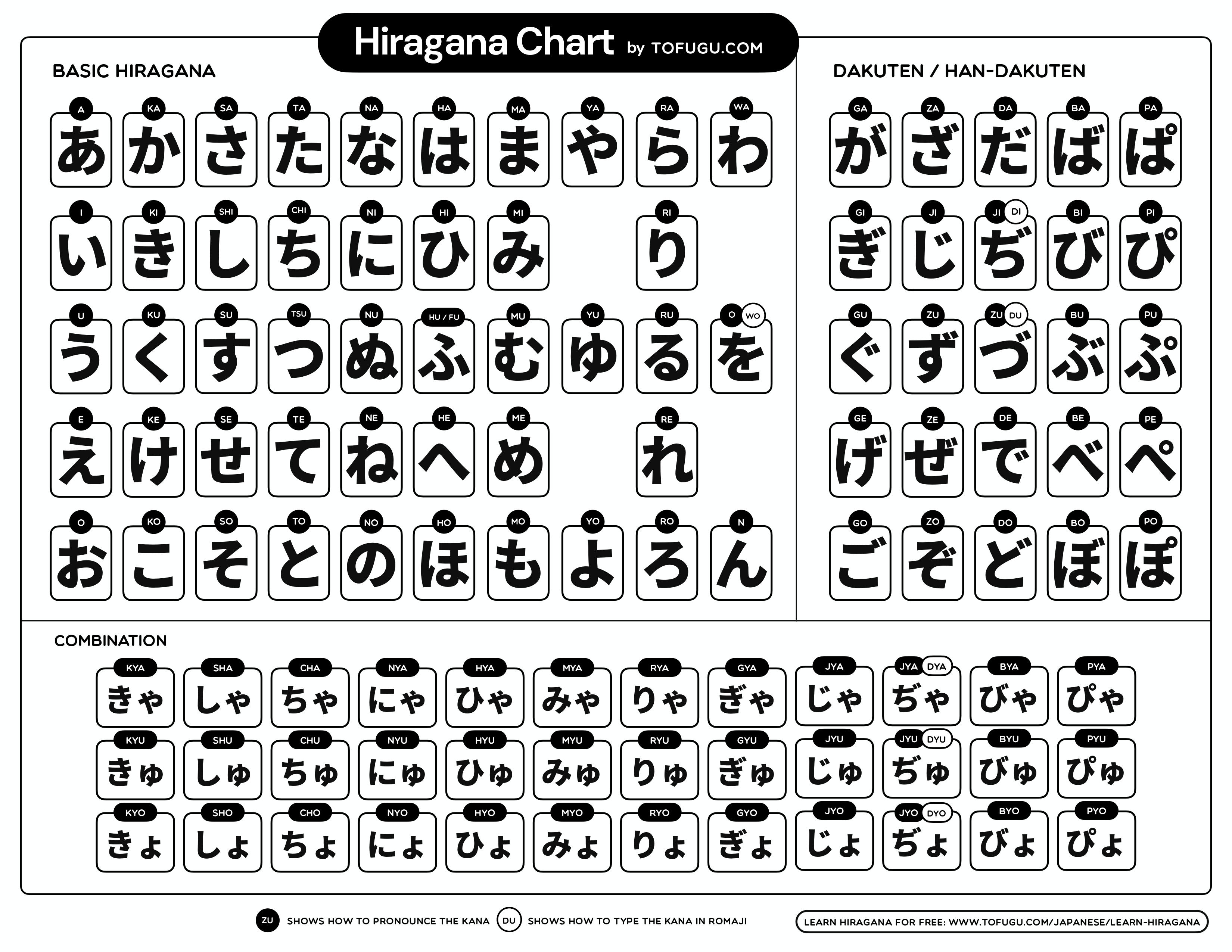
Hiragana is a phonetic alphabet (sound based) alphabet. Each symbol is a syllable instead of a single sound like in English. So one of the readings for “Power” is RI-KI (we’ll talk about RI YO KU in a bit), which looks like りき. RI is writtenりand KI is writtenき.

Your second question is why is it saying RI YO KU is wrong?

Let’s look at the hiragana. Here are the symbols:り (RI), よ(YO), く(KU).

But power isn’t ri-yo-ku(りよく) it’s actually ryo-ku (りょく). The よ is smaller in the second one, see the difference?

There’s a word for that and I’m blanking out on what it is, sorry. But if you look at this chart you can see there are a bunch of two-character combos, which end with a smaller YA (や), YO (よ), or YU (ゆ) and make a different sound form normal: NI+YA = NYA, HI+YA = HYA, etc.

Again, staring with hiragana lessons and learning those patterns will make things a lot easier.

(As for the mnemonic that uses “lock” for “ryoku”, I don’t know what to tell you there, that is a bit confusing. I think riki is also a valid answer so you could stick with that one for now.)

(Edited for typos.)

19 Likes

The mnemonics are there to push you to the answer, not be the answer because the English language doesn’t align properly with hiragana. Its an overall sounds like the answer, not is literally the answer. It can be a bit of a challenge and this is valid. For power, りょく they went with lock which is an okay approximation. It could certainly be better. You can always come up with your own mnemonics and this is encouraged because then the word will stick far better and I’ve had to do this on several cards.

You shouldn’t have to hunt through the hiragana keyboard and actually, I’ve never used the hiragana or katakana keyboard my entire time here. Just type in ryoku and you should get the little よ because its technically a different “letter”. りよく is different than りょく

I think a fundamental piece of your learning is missing in that you may(don’t know this for sure) be missing hiragana knowledge. You are going to want to know hiragana and katakana, and while it sounds challenging to learn two new alphabets you really are only learning the same alphabet twice. I did the Katakana one and learned the them in a week or so. But if you do these you’ll learn all the little combos like きょう but who knows, maybe you’ll learn them even faster than that.

Anyway, don’t give up because it gets more fun from here on out.

11 Likes

Thank you so it’s my lack of hiragana knowledge that is making this so difficult I was worried I was missing something fundamental like that. I was hoping WaniKani would drill it into me but ai don’t think it will

| kimera
November 25 |

  • | - |

Hi there! Okay let’s see if we can figure this out.

First off, have you learned the hiragana characters yet? It sounds like you haven’t if you’re trying to find “patterns” on the kanji keyboard. This means you are playing on super-hard-mode right now!

Hiragana is a phonetic alphabet (sound based) alphabet. Each symbol is a syllable instead of a single sound like in English. So one of the readings for “Power” is RI-KI (we’ll talk about RI YO KU in a bit), which looks like りき. RI is writtenりand KI is writtenき.

Your second question is why is it saying RI YO KU is wrong?

Let’s look at the hiragana. Here are the symbols:り (RI), よ(YO), く(KU).

But power isn’t ri-yo-ku(りよく) it’s actually ryo-ku (りょく). The よ is smaller in the second one, see the difference?

There’s a word for that and I’m blanking out on what it is, sorry. But if you look at this chart you can see there are a bunch of two-character combos, which end with a smaller YA (や), YO (よ), or YU (ゆ) and make a different sound form normal: NI+YA = NYA, HI+YA = HYA, etc.

Again, staring with hiragana lessons and learning those patterns will make things a lot easier.

(As for the mnemonic that uses “lock” for “ryoku”, I don’t know what to tell you there, that is a bit confusing. I think riki is also a valid answer so you could stick with that one for now.)

(Edited for typos.)

1 Like

Thank you I don’t know hiragana at all. I was figuring wanikani would drill it into me but I don’t think it will

| Pancakes25
November 25 |

  • | - |

The mnemonics are there to push you to the answer, not be the answer because the English language doesn’t align properly with hiragana. Its an overall sounds like the answer, not is literally the answer. It can be a bit of a challenge and this is valid. For power, りょく they went with lock which is an okay approximation. It could certainly be better. You can always come up with your own mnemonics and this is encouraged because then the word will stick far better and I’ve had to do this on several cards.

You shouldn’t have to hunt through the hiragana keyboard and actually, I’ve never used the hiragana or katakana keyboard my entire time here. Just type in ryoku and you should get the little よ because its technically a different “letter”. りよく is different than りょく

I think a fundamental piece of your learning is missing in that you may(don’t know this for sure) be missing hiragana knowledge. You are going to want to know hiragana and katakana, and while it sounds challenging to learn two new alphabets you really are only learning the same alphabet twice. I did the Katakana one and learned the them in a week or so. But if you do these you’ll learn all the little combos like きょう but who knows, maybe you’ll learn them even faster than that.

Tofugu – 30 Jun 14

Learn Hiragana: The Ultimate Guide

Start reading hiragana today. Most people waste months, but our mnemonics and step-by-step worksheets will have you reading hiragana in a few hours.

Tofugu – 3 Sep 14

Learn Katakana: The Ultimate Guide

The sequel to our famously fast Learn Hiragana guide. Learn katakana quick, in hours or days (not months) using mnemonics and step-by-step worksheets.

Anyway, don’t give up because it gets more fun from here on out.

3 Likes

(As for the mnemonic that uses “lock” for “ryoku”, I don’t know what to tell you there, that is a bit confusing. I think riki is also a valid answer so you could stick with that one for now.)

Yes, it is super confusing, especially when it’s one of the first mnemonics in Wanikani. The only way it makes sense even a bit to me is:

There’s no L letter in Japanese, it’s approximated as R. (To make things more confusing, it’s pronounced more like a D at least to my ear).

So: RYOKU → LYOKU → LYOK U → LOCK UP

I still don’t think that’s very good and I even wasted my time arguing this with ChatGPT. :slight_smile:

As others have said, WaniKani wants to teach you the proper way of typing things, so (り) + (よ) + (く) won’t be accepted when it’s supposed to be (りょ) + (く).

You’ll see this later on with long vowels as well, such as ăƒ“ăƒŒçŽ‰, which is supposed to be typed ăłăƒŒă ăŸ and not ăłă„ă ăŸ (you have to type in the dash “-” character).

As for the mnemonics, I get that it takes a bit of getting used to at first, but a lot of the times it’s a play on either Japanese or English pronunciation. If a Japanese person were to pronounce “lock”, they’d say ロック (rokku), which is pretty close to “ryoku”, the mnemonic used there.

Later on you’ll encounter recurring characters such as “Jo-anne”, which is supposed to be for じょ (the short “jo”), and “Joe”, which is supposed to be じょう (the long-voweled “jou”). Both of these use the character names’ English pronunciation to give you a hint of how they should be typed in Japanese.

3 Likes

i think you should take a couple of weeks (or more) and practice hiragana and katakana until you can identify them immediately even if woken up at 3AM at night and shown a random one.

that means learning not just the “individual” letters (e.g. らりるれろ = ra-ri-ru-re-ro) but also the various combinations (りゃ, りょ、りゅ = rya, ryo, ryu or りょう、りゅう = ryoo, ryuu)

in addition, i highly recommend you start actually with some very basic japanese before starting wanikani, so you get a “feel” for how the language sounds like - e.g. go watch some super basic introductory japanese videos on youtube to hear what japanese sounds like - and even better if those videos also show you the hiragana/katakana for words AND the “romaji" (latin letter) transliteration.

when I started learning japanese it was after I already spent years watching Anime (subbed, i.e. in japanese with english subtitles) so I had very good familiarity with it.

this “preliminary” step might sound tedious, but - wanikani is not really an “introduction to japanese” kind of app, even duolingo isn’t - both assume some basic former knowledge. wanikani helps you LEARN and memorize new vocabulary and kanji once you’ve already established a foundation of the basic “math” or “physics” of the language.

think of it like: math → physics → chemistry → biology.

each one relies on the foundation of the previous one.

a good analogy might be that what i suggested you do is work on the “math” and “physics” layer first for 2-4 weeks (letters, sounds, “feel”, rythm, what do english loan words sound like in japanese, for example ベッド  beddo (bed) or ă‚·ă‚ąăƒˆăƒ« = shiatoru (seattle) etc.

then wanikani will give you the “chemistry”, the different molecules (vocabulary) composed of those letters and kanji

and then finally you will need to learn the “biology” of the language (sentences, grammar, expressions, etc.) and the “sociology” of it (politeness, honorifics, pitch accent, cultural taboos or customs)

8 Likes

Thank you. I actually am ok at basic conversational Japanese and grammar, at speaking at and hearing it. Not reading or writing it. My objective is to grow that not to learn to read it and write it. Saying I have to learn the alphabet so I can learn to speak it doesn’t make sense to me. What I do want to do is have a system for learning how new words sound so I can work on expanding my vocabulary — speaking and hearing them not writing them — every day.

| klayhamn
November 26 |

  • | - |

i think you should take a couple of weeks (or more) and practice hiragana and katakana until you can identify them immediately even if woken up at 3AM at night and shown a random one.

that means learning not just the “individual” letters (e.g. らりるれろ = ra-ri-ru-re-ro) but also the various combinations (りゃ, りょ、りゅ = rya, ryo, ryu or りょう、りゅう = ryoo, ryuu)

in addition, i highly recommend you start actually with some very basic japanese before starting wanikani, so you get a “feel” for how the language sounds like - e.g. go watch some super basic introductory japanese videos on youtube to hear what japanese sounds like - and even better if those videos also show you the hiragana/katakana for words AND the “romaji" (latin letter) transliteration.

when I started learning japanese it was after I already spent years watching Anime (subbed, i.e. in japanese with english subtitles) so I had very good familiarity with it.

this “preliminary” step might sound tedious, but - wanikani is not really an “introduction to japanese” kind of app, even duolingo isn’t - both assume some basic former knowledge. wanikani helps you LEARN and memorize new vocabulary and kanji once you’ve already established a foundation of the basic “math” or “physics” of the language.

think of it like: math → physics → chemistry → biology.

each one relies on the foundation of the previous one.

a good analogy might be that what i suggested you do is work on the “math” and “physics” layer first for 2-4 weeks (letters, sounds, “feel”, rythm, what do english loan words sound like in japanese, for example ベッド  beddo (bed) or ă‚·ă‚ąăƒˆăƒ« = shiatoru (seattle) etc.

then wanikani will give you the “chemistry”, the different molecules (vocabulary) composed of those letters and kanji

and then finally you will need to learn the “biology” of the language (sentences, grammar, expressions, etc.) and the “sociology” of it (politeness, honorifics, pitch accent, cultural taboos or customs)

It sounds like maybe WK is not the tool you’re looking for, then. WK is very much focused on teaching you how to read kanji specifically and reading more generally. It assumes that you’re going to learn the other parts of Japanese elsewhere. If you don’t want to learn to read the language then WK is naturally going to feel like it’s not teaching you what you want.

8 Likes

Yea lol it’s a fair point. Reddit convinced me I should learn basic hiraguna to be able to learn new words practicing on Anki. I would prefer to learn by sounds only but haven’t figured out a way to do that.

One way or another (Reddit l) wound up on Wanikani trying to learn hiragana but am gathering this is not the way to go

Appreciate your advice and suggestions thank you

| pm215
November 26 |

  • | - |


wb-thor:

Thank you. I actually am ok at basic conversational Japanese and grammar, at speaking at and hearing it. Not reading or writing it. My objective is to grow that not to learn to read it and write it.

It sounds like maybe WK is not the tool you’re looking for, then. WK is very much focused on teaching you how to read kanji specifically and reading more generally. It assumes that you’re going to learn the other parts of Japanese elsewhere. If you don’t want to learn to read the language then WK is naturally going to feel like it’s not teaching you what you want.

It should definitely be possible but it is extremely out of fashion currently, especially with online Japanese learning communities, so I expect you are going to need to do a lot of figuring out your own workflows and tools. (Before about the 1990s the assumption was much more that foreign learners of Japanese were not going to learn the writing system, or at least that they would postpone that until quite late in their learning career. And there’s some academic backing to the idea: the Japanese: The Spoken Language textbooks are famous for deliberately focusing on Japanese as a spoken language first and foremost and avoiding distracting the learner with the writing system. But somewhere around the 1990s the mainstream view of Japanese teaching shifted towards incorporating study of the written language as you went along, with very early introduction of hiragana and gradual addition of kanji. You can see this in published resources for learners: older ones are much more likely to be romaji only, or romaji plus kana/kanji, because publishers felt they would otherwise reduce the size of their market.)

If you’re OK with romaji (i.e. writing Japanese words in the English alphabet) that will make it a bit easier; if you learn hiragana that will increase the number of pre-existing resources you can make use of.

5 Likes

I am of the opinion that you should invest the time to learn the written script if you care about obtaining mastery of the language at all. I’m not even sure if its possible to master the language without knowing the written format. Intermediate textbooks like Tobira won’t feature romaji, or even furigana and will be Kanji only and thats actually where I am stuck now because Tobira assumes you know enough Kanji and I need wani kani level 35 to have an excellent experience.

It also doesn’t take too long to hearn Hiragana and Katakana and you will be better off for it. A language is not just the spoken portion, but also the written portion and you are likely to encounter it more in written than in spoken. The sounds of the language are the hiragana and katakana. Its a bit like trying to learn the English language by the sounds only. It just doesn’t make sense.

There are some that try to learn it by sounds only and I did japanese like a breeze for a few months but I never really felt like i was learning anything and it all felt loose and maybe I was learning something but without a way to measure against something you can’t know if you are actually growing. Thats when I switched to JFZ textbooks and never went back. The idea of learning via conversation does have some academic backing, but it simply didn’t work for me, but it might work for you so yeah. Try and see. Try other textbooks. Try until you like it.

Finally, take reddit with a massive grain of salt. There are a lot of uninformed people giving opinions, so much that I filter reddit out of my search results. Most of the users there aren’t even real anymore, but thats a topic for another time. I’d actually trust anyone in here more than I’d trust a reddit user, because its obvious that many users here care about learning the language and actually do learn.

3 Likes

I’m fine with Romanji and have resigned myself to learning hiragana and no more so I can practice learning new words on Anki or something and combine that steady vocabulary growth with audio/video immersion (no English subtitles). I’ll also keep using apps like Duolingo and YuSpeak but they don’t do much beyond the very basics. If I can figure out an audio only way to learn new words I will but as you correctly point out it’s challenging.

| pm215
November 26 |

  • | - |


wb-thor:

I would prefer to learn by sounds only but haven’t figured out a way to do that.

It should definitely be possible but it is extremely out of fashion currently, especially with online Japanese learning communities, so I expect you are going to need to do a lot of figuring out your own workflows and tools. (Before about the 1990s the assumption was much more that foreign learners of Japanese were not going to learn the writing system, or at least that they would postpone that until quite late in their learning career. And there’s some academic backing to the idea: the Japanese: The Spoken Language textbooks are famous for deliberately focusing on Japanese as a spoken language first and foremost and avoiding distracting the learner with the writing system. But somewhere around the 1990s the mainstream view of Japanese teaching shifted towards incorporating study of the written language as you went along, with very early introduction of hiragana and gradual addition of kanji. You can see this in published resources for learners: older ones are much more likely to be romaji only, or romaji plus kana/kanji, because publishers felt they would otherwise reduce the size of their market.)

If you’re OK with romaji (i.e. writing Japanese words in the English alphabet) that will make it a bit easier; if you learn hiragana that will increase the number of pre-existing resources you can make use of.

I don’t need to master the language at least not any time soon, I need to be comfortable speaking it fluently that is the goal. Learning to read and write it before speaking it seems backwards and unnatural to me. I know people who speak it fluently like a native through immersion who never wrote a single character. I am convinced immersion is the best way to learn to speak it and finding the way to grow my vocabulary without context (ie I’m not in Japan so will be immersed in podcasts and videos) is what I’m trying to figure out now

| Pancakes25
November 26 |

  • | - |

I am of the opinion that you should invest the time to learn the written script if you care about obtaining mastery of the language at all. I’m not even sure if its possible to master the language without knowing the written format. Intermediate textbooks like Tobira won’t feature romaji, or even furigana and will be Kanji only and thats actually where I am stuck now because Tobira assumes you know enough Kanji and I need wani kani level 35 to have an excellent experience.

It also doesn’t take too long to hearn Hiragana and Katakana and you will be better off for it. A language is not just the spoken portion, but also the written portion and you are likely to encounter it more in written than in spoken. The sounds of the language are the hiragana and katakana. Its a bit like trying to learn the English language by the sounds only. It just doesn’t make sense.

There are some that try to learn it by sounds only and I did japanese like a breeze for a few months but I never really felt like i was learning anything and it all felt loose and maybe I was learning something but without a way to measure against something you can’t know if you are actually growing. Thats when I switched to JFZ textbooks and never went back. The idea of learning via conversation does have some academic backing, but it simply didn’t work for me, but it might work for you so yeah. Try and see. Try other textbooks. Try until you like it.

Finally, take reddit with a massive grain of salt. There are a lot of uninformed people giving opinions, so much that I filter reddit out of my search results. Most of the users there aren’t even real anymore, but thats a topic for another time. I’d actually trust anyone in here more than I’d trust a reddit user, because its obvious that many users here care about learning the language and actually do learn.

I am very new to Japanese; I want to learn it all—reading, writing, conversation. I became frustrated with the quizzes the same as you—getting something wrong and not seeing it again for a number of items. I have learned Hiragana (and am working on Katakana), so that has helped. But I need to write in order to remember, so I make charts. If I don’t immediately know the answer to the quiz item, I look at my chart so that I am writing the correct answer (since writing the wrong one over and over does absolutely no good.) I also use the word “pronunciation” for what they call “reading.” And that helps me distinguish between reading and meaning (sound so much alike, yes?) Maybe something like this would be of use.

I am getting much better at remembering the kanji, so my system is working—for me.

I also use many other websites/courses to practice in different ways.

.

1 Like

Interesting thank you

| MTeague
November 26 |

  • | - |

I am very new to Japanese; I want to learn it all—reading, writing, conversation. I became frustrated with the quizzes the same as you—getting something wrong and not seeing it again for a number of items. I have learned Hiragana (and am working on Katakana), so that has helped. But I need to write in order to remember, so I make charts. If I don’t immediately know the answer to the quiz item, I look at my chart so that I am writing the correct answer (since writing the wrong one over and over does absolutely no good.) I also use the word “pronunciation” for what they call “reading.” And that helps me distinguish between reading and meaning (sound so much alike, yes?) Maybe something like this would be of use.

I am getting much better at remembering the kanji, so my system is working—for me.

I also use many other websites/courses to practice in different ways.

.

What has helped me with the “wrong answers” is just writing them down. When I get it wrong, i write the correct answer. Reenforces the learning. If I’m still missing it after 2-3 times i look at my notebook and just put the right answer. I’ve already shot my SRS level, no point in torturing myself into remembering.

1 Like

Hi! I spent the majority of my Japanese learning doing conversation practice, so I have somewhat the experience of learning primarily through sound and speech. However, before I jumped into regular conversation, I did have to get some basics down first.

The absolute first thing I did to learn Japanese was learn Hiragana and Katakana, which is an important base, even if your main goal is listening and speaking. I then went through 1.5 elementary textbooks to get some grammar and vocab before I started regularly talking.

After that I learned the bulk of my vocab through listening and speaking, and I’m at the point where I’m finally learning how to spell and read words I’ve been using for a long time lol. I will say, learning how to read is a fantastic aid for speaking and listening, and learning how kanji works hyper-boosted my recollection of new words.

Definitely start with Hiragana! It will give you a sense of how things really should be pronounced, when romaji alone can be vague.

3 Likes

Are you a native English speaker?

I am not. And I too sometimes have difficulty when an example is giving me an english word to compare to the japanese reading. I feel like they are usually nothing alike. But that can also be due to Amarican English or British English pronunciation.

I usually don’t read too much into the examples and mnemonics. Only after multiple wrong answers, do I check on the mnemonic or make one myself.

1 Like