Thanks, yes, I was aware of the term, but wasn’t sure how and if it connected to バイト (turns out it is connected even linguistically, with the “ter” part of “Freeter” coming from “Arbeiter”)
I found this excerpt from Wikipedia particularly relevant to my question:
In the 1980s, the term was seen in a positive light signifying the freedom to explore other alternative options for employment for fun when the economy in Japan was prosperous with many different job opportunities. In the 1990s and 2000s, the term switched to a negative connotation and Freeters were seen as burdens on society.
Thank you for asking! So I guess in the context of the book the criticism comes from the fact that she’s showing no sign of wanting to move on to full employment after many years of バイト (which by the way I’d imagine to be very difficult, seeing that many people seem to prefer finding a job even before they graduate, and stay on that company for their whole life - again I’m basing this on fiction rather than any first-hand experience, so my perceptions may be skewed).
In short, you can work 80 hours a week if you want, if it’s a バイト (or パート) it’s a バイト.
The difference is contractual.
バイト and パート aren’t full fledged positions (正社員 or a 契約社員, but let’s avoid getting too deep into it).
In general, that means:
No steady promotions.
No bonuses.
No proper paid leaves (only the bare minimum defined by law).
No guarantee your job is gonna keep, you know, jobbing. They can just say “no one buys ice cream on winter, so instead of doing 40 hours a week the next two months you just need to come once a week for a 4 hours shift” and that’s it. (and pay you only that, of course)
No expectation of ever being asked to give proper input on the job and etc. Just performing given tasks.
You can be “fired” at any time. Because legally you and your employer are not really bound, just “doing hours”. Saying “we don’t need you to come any more” legally doesn’t count as “firing”, it’s just “no more hours for you”.
When you say someone is a 正社員 you expect the person to have a full-fledged contract that provides them all of the above, proper benefits such as health care, insurances and family/children additional, a career prospect and etc.
Japanese usually refer to people who just make a living through “part-time jobs” as フリーター.
That is an actual legal definition used by the government. People between 15 and 34 who are “unemployed” (in the sense of a full contract) but have an income and are not engaged in formal education.
(The difference between a バイト and a パート is merely if you are a student or not. Legally they are the exact same thing.)
So, I’ve noticed something weird and want to get other peoples opinion on it.
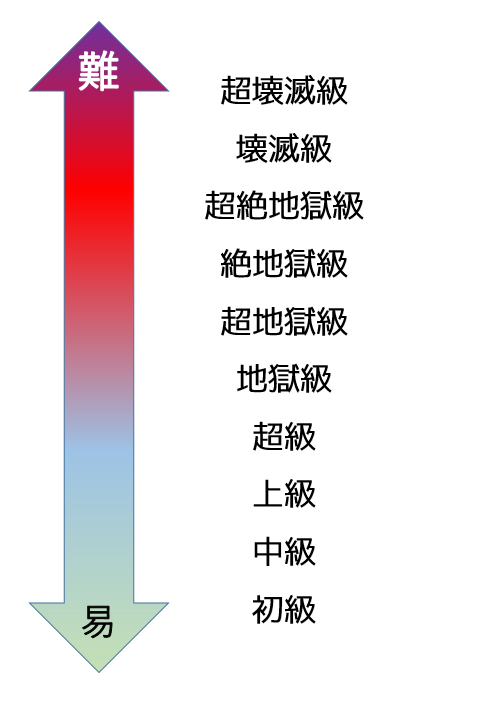
To me it seems that there isn’t a predominant mapping between colors and difficulty in Japan from what I’ve gathered. In the western world it’s most often “green → easy, yellow/orange → medium, red → hard” in my experience. This is maybe a result from red being associated with bad things (like blood) and easy with nice things (like meadows) and from there on the association to traffic lights that have green, yellow, and red as well (although they do have that in Japan now too, I guess).
In Japan-influenced media I’ve seen all kinds of variants, like “blue → easy, green → medium, red/purple → hard”, “green → easy, blue → medium, orange → hard”, “orange → easy, green → medium, red/purple → hard”, “dark blue → easy, light blue → medium, green → hard”, and many others.
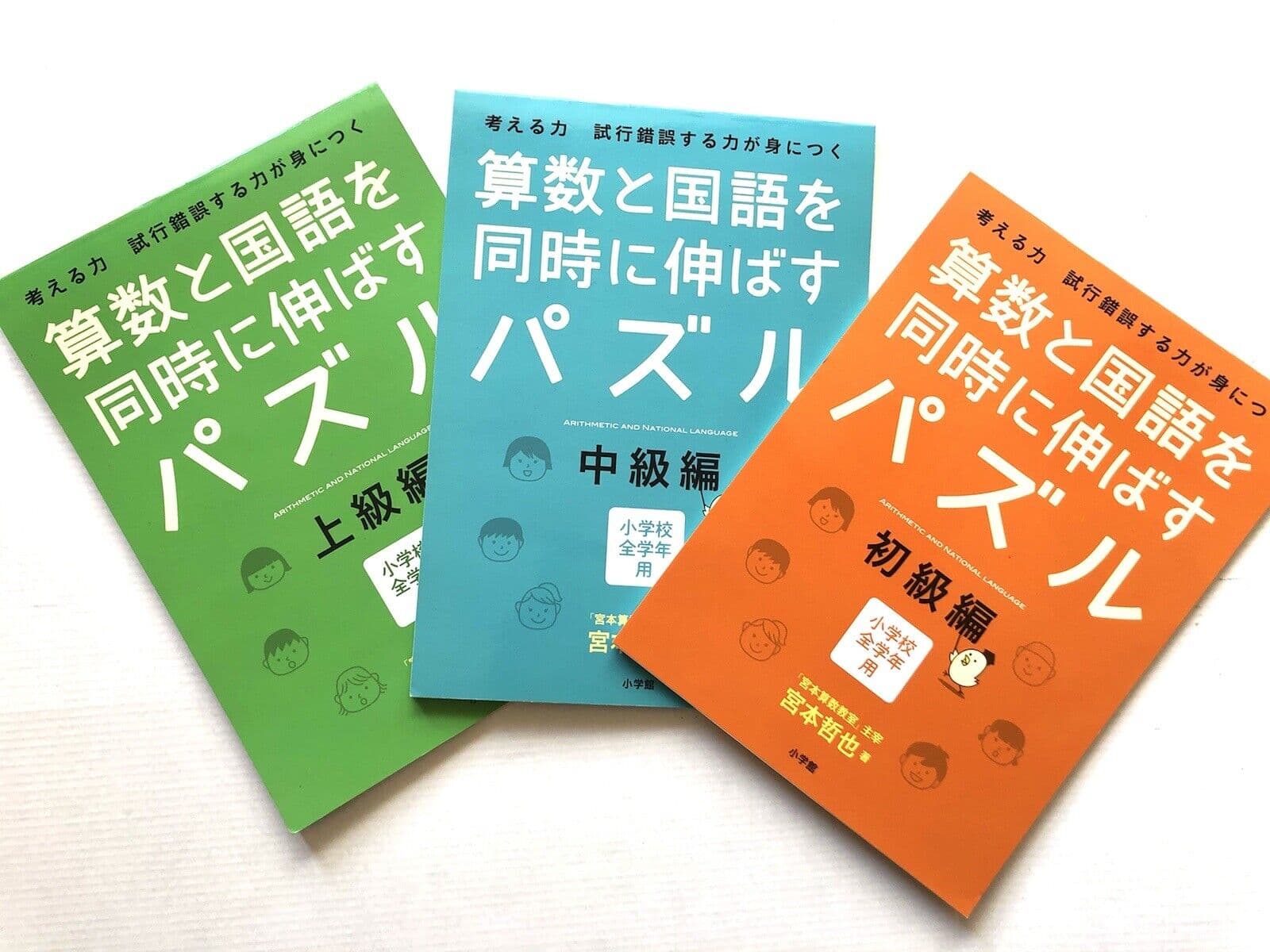
Difficulty scale reference images
these are just some random ones I’ve found from googling
My point is there doesn’t seem to be one mapping that is used the most, or maybe I haven’t been exposed to enough of them to notice the pattern. Either way if somebody has noticed this as well or knows something more about the phenomenon, like which color to difficulty mapping is the most common or where I can read about it, that would be greatly appreciated!
I have not been thinking of this as being different from Western color-mapping, but people getting creative today relies heavily on our previous understanding on these things - and so they also work as communication.
Those are my thoughts. I’ll leave to others to figure this puzzle out.
As a side note, I suggest not using the <> code paragraphs. It does look a bit odd. I was not sure what you were asking initially. Use " instead.
That is very true, that’s the reason I noticed the difference in the first place. I sometimes expect, for example, a book to be the 初級 version just because it’s green and then I notice: oh no it’s actually 上級…
Or for another example the YouTube videos by “Comprehensible Japanese” are colored: absolute beginner → dark blue, beginner → light blue / cyan, intermediate → purple. And just from looking at the thumbnails I always mistake complete beginner and beginner videos because a lighter color kind of feels easier… I guess? It has a lot to do with conventions I think, as you said, which other people also know of and deliberately incorporate.
In my experience, for business presentations at least, the standard symbology in Japan is ◯ × △ (maru for good, peke for bad, sankaku for somewhere in between). I’ve not noticed as consistent a convention for color.
This correlates pretty well to green/red/yellow in the west.
I’ve noticed that both are becoming more and more common in both locations, but sankaku still seems more prevalent in Japan.
Short question about family names.
How does it work with getting married and having kids?
Let’s say that 岡崎 道子 (OKAZAKI Michiko) falls in love with 青木 猛 (AOKI Takeshi).
They get married. Does Michiko becomes 青木 道子? And when they get kids, do they also get 青木 as a last name?
You cannot have different names when married. However there’s a lot of political discussion around making this possible. It’s also known as 選択的夫婦別姓 (husband and wife having different family names by choice).
At the moment, I assume in most cases the woman takes the man‘s name (I’m too lazy to look up a statistic), but men taking their wife‘s name is also possible. The children will then take that name, I assume, since they’re in the same 戸籍.
I think there’s an exception for international marriages. International couples can have different last names, and some see this as an unfair advantage for international couples, but it’s actually due to the fact that as a foreigner you can’t legally be registered in your partner‘s 戸籍. Or so I’ve read. And the child will get the Japanese name and be part of the 戸籍 of their Japanese parent.
Interesting. Maybe I don’t understand how you mean here, but I would have assumed that you cannot force people to change their last name when moving to Japan? So, if the partners already have different last names but are married, that’s how it is. Or is it the other way around, that foreigners can’t get the same legal protections that might come with registering under your partner’s 戸籍 (I don’t know what this entail really, that’s why I’m asking)?
Well, if you’re already married outside of Japan then you’re probably not a Japanese citizen either way, so I would assume the whole 戸籍 thing is not relevant to you. I was talking about the case „foreigner marrying a Japanese national“, in which case the partners actually have the choice to both keep their family names, but the foreign partner cannot register in the 戸籍 of their partner. But if two Japanese people marry they don’t have that same choice, because they have to 入籍 and cannot have two separate 戸籍, if I understand it correctly.
Basically, what @Rrwrex said is what I was trying to say.
I‘m not sure either what benefits you get with the 戸籍 thing, but I remember hearing some things regarding custody of your child if you end up divorcing. There’s some cases where the Japanese parent can basically make it impossible for the foreign parent to see their child, and things like that.
And there’s a lot of anti-個性制度 sentiment in Japan as well, calling it archaic etc. But I’m not that up to date about all of that.
This is what I was fearing. It just sounded strange to my ears and there just had to be some legal ramification or meaning why they wouldn’t just let people register in someone’s family register.
Somewhat an aside, but apparently having your own 戸籍 can be considered proof of being a Japanese citizen. Haven’t looked into the original sources yet, but see “Citizenship” section of the Wikipedia article:
Yes, but foreigners residing in Japan are also required to register at the local city hall and whenever they move within Japan (there is no bureaucracy like Japanese bureaucracy).
Foreigners register with a a separate system (登録原票).
That’s interesting reading! I only lived in Japan from 2017-2018 and the local authorities and placement organization (JET Program) did all the paperwork for me, so I was only aware that I had a 在留カード that would need to be renewed if I stayed longer than 3 years.
The JET program is pretty neat. I’ve worked with them off and on over the years at many different startups. Very helpful.
I mostly know the registration process from working at Mitsubishi Semiconductor back in the eighties. They’d periodically take a group of us clueless engineers down to the 伊丹市役所 to renew our registrations. I clearly remember the interminable wait and mystification (what are all these papers they keep shuffling around?!).