Please follow these rules to avoid inadvertent ネタバレ. If you’re unsure whether something should have a spoiler tag, err on the side of using one.
Any potential spoiler for the current week’s reading need only be covered by a spoiler tag. Predictions and conjecture made by somebody who has not read ahead still falls into this category.
Any potential spoilers for external sources need to be covered by a spoiler tag and include a label (outside of the spoiler tag) of what might be spoiled. These include but are not limited to: other book club picks, other books, games, movies, anime, etc. I recommend also tagging the severity of the spoiler (for example, I may still look at minor spoilers for something that I don’t intend to read soon).
Any information from later in the book than the current week’s reading (including trigger warnings that haven’t yet manifested) needs to be hidden by spoiler tags and labeled as coming from later sections.
Instructions for Spoiler Tags
Click the cog above the text box and use either the “Hide Details” or “Blur Spoiler” options. The text which says “This text will be hidden” should be replaced with what you are wishing to write. In the case of “Hide Details”, the section in the brackets that is labelled “Summary” can be replaced with whatever you like also (i.e, [details=”Chapter 1, Pg. 1”]).
Hide Details results in the dropdown box like below:
Example
This is an example of the “Hide Details” option.
The “Blur Spoiler” option will simply blur the text it surrounds.
I’m also done with this weeks reading. Another week where nothing much happened.
Even if I don’t have much to say, I love reading your guesses. I particularily liked the theories of @chofas and @eefara in last weeks thread
My thoughts for this week:
The teamup with 夢読 edit: 月夜 was half expected. That’s the easiest setup to give the reader as much information as possible.
I like their pairing, this weeks reading also flowed well as always.
I have some questions this week where I had trouble parsing the sentences. Maybe someone wants to help my silly brain:
P177
月夜は不思議そうに数回まばたきをしたあと、にまーとどこかいやらしい笑みを浮かべる。
Just finished 2.4. Honestly, them talking about a hypothetical new first with for the mystery genre in itself has me hyped up to read something like that. Maybe I’ll need to re-read some Poe when all is said and done in celebration…
Edit: 2.5 done. Happy (?) to see 遊馬 is filling in the part of “sidekick who gets told his theories are idiotic constantly” already. I wonder if tagging along with 月夜 to gain information is going to be worth the headache for him…
Quick question regarding 酒泉: I’ve generally been familiar with his ッス speech pattern in the form of young, rougher-speaking men. Is there are any other nuance to it, out of curiosity?
Not that I know of. It’s played up in dramas as “ugh, these boys” and I sort of equate it to how in English we have “bro talk” (with probably differing names regionally).
Given there’s いやらしい笑み after, I just read it as a mimetic-type thing, same meaning/variation of something like にんまり, so にまー + と
ニマニマ is a similar variation-type thing of にんまり and also takes と
Might be wrong but can’t find anything else about にま
I’m only halfway through part 5 but my god this is incredibly tedious. 月夜’s eccentricity is funny in small doses but it gets stale really quickly, especially since she really hasn’t done much to earn this level of arrogance yet.
I was trying to figure out why I wasn’t as bothered by Hercule Poirot’s boasts in Christie’s novels, and I think that’s because a lot of the page count is dedicated to conversations with other people, but here all the exchanges are either “I’m a brilliant detective and I’m a genius. Also I’m a genius and a brilliant detective who is also a genius. Did I mention that I’m a genius detective that’s brilliant? And a genius.” or trite meta-essays on the nature of detective stories that fail to say anything substantive and keep referencing the same works and authors again and again.
It didn’t help that the author spends so much time on this trivial 閂 thing. You just carefully let it drop as you close the door! It’s blatantly obvious! At this point the reveal will necessarily be frustrating for me: either I’m right and then these people are idiots, or it’s something else but then what’s wrong with my idea? Why aren’t they addressing it instead of wasting time with Rube Goldberg theories? I thought Yuuma was about to propose it but then came up with the same idea but more complicated…
I frankly hope that Sherlock and Watson split up soon because this is unbearable.
I’m not as annoyed as you are honestly. She is quite the character but luckily I find it still bearable.
I wouldn’t hope of them splitting up anytime soon. It looks to me as if this is the authors way of giving us at least some amount of insight into what could be going on.
I think I sound harsher than I really feel in that comment, partly because I was tired but also because I was at the point where they had spent a while inspecting the 閂 without making any progress and just laboriously repeating things that had already been established (“a string doesn’t work because it’s too difficult to manipulate the knob and also the door closes super tight”). Then they finally moved on and went to speak with the author and the editor and I thought we’d finally get a change of pace after all this 月夜 “I’m a detective genius let me ramble aimlessly about detective stories” extravaganza. But then the topic immediately shifts towards… detective stories once again.
One of the female character in NANA talks like that too. Well she is a punk and not the definition of polite (not only does she go around in her apartment with SHOES ON but she even CLIMBED ON HER KITCHEN TABLE with them )
So yeah, he probably has no soul
Maybe only read this when you’re done with this week’s assignment because I don’t remember when it’s being said, but at some point they explain that if your book has no notable character, you might as well just write your mystery in a question / answer form (such as "a man has hanged himself in a closed room but there is nothing in the room, expect a water poodle puddle below him, how did he do it? answer[1] ). So a peculiar detective is necessary in order for a meta book to be a good meta book. Now I look back to all the Columbo and Sherlock Holms and other detectives that I know and that always seems to apply, makes a lot of sense!
I feel like I’ve seen you write this a couple of times before looking forward to seeing what’s the author’s explanation
On that subject, when I read that sentence 相棒を手に入れ、名探偵としてレベルアップして、事件の謎に挑もうというわけだね。, it made me think about how sometimes, at work, I also like to call in a colleague to be my Watson, so that I have someone to discuss the problems with. Helps thinking clearly and coming up with good solutions. :))
I haven’t finished this week’s reading yet, but I’m halfway through 5 and… Tsukiyo… OMG, she gets on my nerves.
Like… Remember when you had to write an essay in school and the teacher said “minimum 3000 words” and then you would write your essay, find out you were short 1000 words and then go back and just repeat the same but with other words just so you could reach the minimum?
That’s what Tsukiyo is so the author would get to 500 pages. And it gets on my nerves XD
 Week 4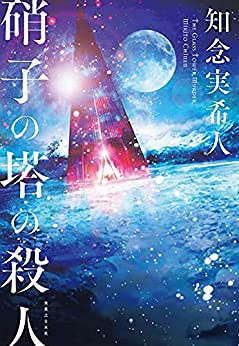


 Maybe I’ll need to re-read some Poe when all is said and done in celebration…
 )
) looking forward to seeing what’s the author’s explanation
 Surely the dog wasn’t big enough to take his weight?