Please follow these rules to avoid inadvertent ネタバレ. If you’re unsure whether something should have a spoiler tag, err on the side of using one.
Any potential spoiler for the current week’s reading need only be covered by a spoiler tag. Predictions and conjecture made by somebody who has not read ahead still falls into this category.
Any potential spoilers for external sources need to be covered by a spoiler tag and include a label (outside of the spoiler tag) of what might be spoiled. These include but are not limited to: other book club picks, other books, games, movies, anime, etc. I recommend also tagging the severity of the spoiler (for example, I may still look at minor spoilers for something that I don’t intend to read soon).
Any information from later in the book than the current week’s reading (including trigger warnings that haven’t yet manifested) needs to be hidden by spoiler tags and labeled as coming from later sections.
Instructions for Spoiler Tags
Click the cog above the text box and use either the “Hide Details” or “Blur Spoiler” options. The text which says “This text will be hidden” should be replaced with what you are wishing to write. In the case of “Hide Details”, the section in the brackets that is labelled “Summary” can be replaced with whatever you like also (i.e, [details=”Chapter 1, Pg. 1”]).
Hide Details results in the dropdown box like below:
Example
This is an example of the “Hide Details” option.
The “Blur Spoiler” option will simply blur the text it surrounds.
So, this post will probably be a little longer. I wrote down many thoughts.
Now the whole thing makes a lot more sense to me. I totally forgot that 遊馬 didn’t investigate any of the bodies except for 加々見. All other bodies were deemed off limits by 加々見 which is probably a big reason why he seemed so suspicious to a lot of us readers.
The part I’m struggling the most with: it seems 神津島 had to plan the whole thing many, many years in advance. Gathering all the people (especially 左京 and 九流間), making connections, building the glass tower, etc., etc.
What I really like is that he tried to incorporate the 蝶々岳 murders into the story. Building the prison and using this as motivation for 加々見 seems so cool .
The solution also neatly explains the problem I had with 加々見 having no idea about mystery novels and still was “friends” with 神津島. If he’s just a hired actor, all his behavior throughout the book makes total sense.
Regarding the 巴 eating part of the story. I distinctly remember 月夜 egging 巴 on to take the first bite. But at that time I actually thought she was just not sure if the food is poisoned and wanted somebody else to taste it first
I’m not really blown away by the reason for the murders. Just being bored and wanting to raise the stakes feels a little like a cop out. It fits with 月夜’s character, but it’s so over the top that it feels kinda mystery novel only.
I have to give it to the author. It explains why she was so down after 巴’s death. And then she gave her sad backstory. After that, I dropped most of my suspicion of her and really thought she just loves mysteries and wants to be a 名探偵. Serves me right .
What I find funny about the book is that I think we found nearly all inconsistencies in our discussion together. BUT these inconsistencies are exactly what makes the story work. I’m especially proud to be so cynical of the explanation for the third murder. It’s the one that let 月夜 boil over as well. Not sure what it says about my own mental state though
It also neatly explains why the 踊り人形 and the materials to solve it appeared. She just wanted to make it more interesting by helping 遊馬 a little.
I also chuckled about all the people in these threads being so suspicious about her showering in his room. Y’all were 100% right that she drugged him and used the time to commit murders. BUT she didn’t steal the master key from 酒泉, only the Key to room 3. So close.
Regarding here going free in the end. I feel like it’s definitely a better ending then they both die in the fire together. Wouldn’t have liked that ending. But I’d still have loved her somehow being captured in the end. The book painted her as such a smart and capable character, though, I’m not sure how such an ending could have been well crafted…
Regarding how I rate the book, I’m a little torn. If we are talking about the mysteries, I think it is well crafted. The conclusion feels satisfying to me, the prose is easy to read and flows exceptionally well.
BUT I can’t simply ignore the long stretch of pretty boring, “they go here, they exchange 5 lines of dialog, then they move there, talk some more”, where it feels like nothing substantial is happening. Maybe these parts are more exciting if you are more of a mystery novel buff than me. I think removing some of the ramblings and shortening the middle part would have probably improved the book for me.
The beginning first day with 遊馬’s murder and basically everything on the last day felt good though.
Probably a 4/5 overall? With a strong recommendation for anyone who wants to actually get into the “flow” while reading.
Now I’m just left waiting for all your impressions @pocketcat, @miwuc I’m also interesting what our silent observers have to say…
I’ve been relistening to the audiobook at roughly the same pace as ya’ll so I can give fresh impressions (since I read this book 3 years ago). I’m hoping to wrap this weekend and will chime in then! But I will say that I absolutely loved 月夜 on my first read and also wanted to shake 遊馬 multiple times because he’s such a dolt Also, as a fun bit of color for anyone who didn’t already know this, the author is himself a doctor and he writes a TON of mystery books with doctors as the MC. Some better than others. I think this is one of his best works. For people who want to avoid the pacing issues though, 仮面病棟 and its sequel 時間病棟 are probably good bets. They’re both much faster paced.
I don’t have particularly insightful things to say, I quite liked the book overall although I agree that the whole middle part was quite slow. I’m glad I didn’t read the speculations so the reveal was a real surprise. I was really impressed with all the stuff y’all got right, like this comment which was spot on.
It was also fun seeing everyone say “this makes no sense!!” while knowing that it was part of the plot. I liked how everything tied together based on things that had been hinted at earlier (like Koudzushima’s bad writing). But that’s actually one small gripe I would have with the book: when Tsukiyo is solving the fake murders, she has to use the evidence available to find the solutions and rule out things that don’t make sense. But the solutions she found still don’t quite make sense, as pointed out in this last part. So how can she be sure that they’re the right answers?
And as I am writing this, it is night and there it is a clear blue sky outside, with the moonlight shining in my living room, very fitting…
If last’s week winner word was こめかみ, then this week’s winner expression is definitely 水を向ける. Used five times this week, 12 times in total in the book.
Anyways. There weren’t that many surprises left for us with the final reveal, but I enjoyed the pace.
And from the moment where 月夜 announced that she had planted explosives, I was really surprised and had no idea where the whole thing would go. I liked the ending!
I do feel bad that 神津島 (yes, even him), 老田, 巴 and 加々見 really died, but I really think the author did a great job with this book. Repeating what others have said, but it’s really funny in hindsight, that the inconsistencies and suspicious things turned out to be part of the plot. All calculated. Meta book status achieved.
5/5 for me!
“I can fix her” – 遊馬, a shotgun trained on his face.
I liked it! I always enjoy it when authors use the tropes of the genre against the reader. We had all noticed some weird inconsistencies in the previous cases (the implausibility of the body drop in the final case, the weird idea of burning the movie screen without triggering the fire system, the idea that the butler and the maid would casually assist such horrible human experiments etc…) but I just assumed that it was the inherent sloppiness in most detective stories and not a hint that something was afoot. I remember having a similar realization while watching the TV show “The Good Place”, although I won’t say more to avoid spoiling it.
You can still poke holes at the credibility of the story but it’s convincing enough I think. It does neatly wrap up almost every loose end so far in a somewhat reasonable way and while playing on the themes of the story. I especially like that the “real” murders are much simpler and straightforward than the complicated locked-room mysteries made up by island guy. Because of course in reality murderers don’t use these absurdly complicated mise en scenes. You just stab the guy and rig gasoline to blow up the place. This way the book can have it both ways: you have the high concept, unrealistic Cluedo-like murder mystery and a more grounded realistic thriller underpinning it all.
I don’t remember if I mentioned it but I also considered that 月夜 could have been the one who killed her parents, I thought that it would be weird for such a crime to be mentioned and not resolved, and that seemed like the obvious solution. In the same vein I also like that the unsolved crimes mentioned in passing at the start of the book are also effectively solved! I definitely did not see that coming. No resolution for the old OL murders however.
I’m still annoying that the 2nd crime in the dining room is supposed to be “the good one”. No it’s not. It’s the dumbest one. Stop it.
Overall it was a satisfying read, although it could really have used another editing pass to tighten everything up. You could probably cut a hundred pages or so and end up with a better paced story.
A few months ago I read Christie’s Death on the Nile and I remember thinking that, while the “mechanical trick” revealed by Poirot at the end of the story was well made and convincing enough, the characters were a bit too flat and uninteresting to really catch my attention. As such I did enjoy the reveal from an intellectual standpoint but emotionally it felt a bit hollow. I like that this book did manage to develop interesting characters, I found 月夜 a really good protagonist/antagonist (when she’s not rambling for pages on end about crime stories). I kind of wanted her to win at the end.
I don’t find 遊馬 quite as convincing, I feel like his personality changes completely once he understands what’s really going on. On one hand it’s partly understandable, psychologically it must be a big shock, but at the same time he goes from clueless idiot who tries to frame other people for his crimes and seriously considers attacking innocent people to protect himself to action hero who selflessly confronts (and flirts with?) the super-intelligent villain and puts his life on the line to help strangers while making jokes. It feels like completely different character.
Thank you @Akashelia for this club, it’s the first time I participate in an ABC and, while it was challenging to keep up, I’m happy that I did it. I definitely feel a difference in my reading speed from when I started, it was good practice Japanese-wise.
I liked it, it fits with the themes of the story. It’s meta to the end. I prefer that to some far-fetched motive. “月夜 is batshit insane” is good enough of a motive for me, although I was surprised when I realized that 遊馬 earnestly followed along (I thought he was humoring her to gain time at first, but no he’s insane as well).
I was still happy that I clocked that she would have used the opportunity to snatch something, although I certainly didn’t think of this. At the same time I would argue that, even in hindsight, that part of the plan was pretty far-fetched, risking stealing a key just so that she could engineer a complicated way to push 遊馬 down the stairs… So many things could have gone wrong.
More generally at this point nobody had died, right? So island guy would be able to see everything she’s doing, including torturing the maid to gain access to the hidden staircase, no? The author didn’t waste a lot of time discussing how precisely the real murders took place, and I think that’s because that doesn’t fully make sense.
Definitely. Even that ending section could have been tighter. The part where they sort of flirt with each other is completely superfluous IMO. Also all these shenanigans with the tazer, the shotgun, the gasoline, her taking the cook hostage etc… None of this really adds to the situation. The author should have taken a hint from classical detective stories that often wrap everything up in only a few pages. Once the cat is out of the bag there’s no point padding 30 more pages. The epilogue was also completely pointless, it doesn’t tell us anything we couldn’t have guessed from the ending and the postcard is tacky IMO.
It was even more frustrating for me because I was rushing to finish to be able to read the spoilers in this thread and post my impressions while they’re still fresh!
I still think it’s on the high end of detective novels quality-wise. There’s a lot of slop there. 変な家 that was read in the IBC last year for instance was very entertaining but incredibly poorly crafted compared to this.
Finished!
well a few days ago, but finally posting
Summary
Well that was an eventful final week of reading…
First up, from week 2 I kind of thought there was something going on with 神津島
But then as the weeks got by I moved away from that and eventually settled on 月夜 being behind everything. Turns out of course, both were technically right and wrong…
I didn’t see it switching from a prepared thing by 神津島 to 月夜 so late, I assumed it was her from the start eventually. 遊馬 kept giving quotes that people had said which obviously would serve as clues if you read them in the right frame of mind, but reading them the first time around they didn’t mean much. I think that’s the best way to do something like that
Then the action-movie style ending at the end! So much happened. I think it was a very satisfying ending, everything wrapped up nicely, no more people died, 月夜 found her new purpose and spared 遊馬 etc etc, it was good. Didn’t blow me away completely, but it was definitely satisfying.
Don’t have much more to say, あまり詳しくなんかない re. Japanese mystery, so I got most of the non-Japanese references, but had only heard of the Japanese ones in passing. I’m sure it would be a bit different knowing more of them, but on the other hand, it allows us to feel more like 夢読
Structurally I think this was a very good mystery. Not so sure about the writing style, it ebbed and flowed, but I did find that the end grabbed me in and I couldn’t put it down though. Happy to have read it!
Thanks to @Akashelia for hosting! And to everyone else for posting along
Also second most important thing, remember to mark that you have read a book that has won the Honya Taishou Challenge
Thanks everyone for picking the book and reading along. I nominated it back in February so of course I had forgotten all about it when it got picked, and I panicked a bit with committing to such a big book (my 2nd longest so far) right now in the middle of a lot of other commitments, but I’m really happy I read it and in good company!
This book hasn’t been translated into English yet, right? Isn’t that strange given that it seems to be well received in Japan? I feel like the endless sludge of light novels gets translated within a year usually.
Seeing as 七回死んだ男 recently got translated and it was a) published originally in the 1990s and b) one of the absolute worst Japanese mysteries I’ve ever read…I don’t think there’s really any rhyme or reason to what get’s picked to be translated
Ok I have finished relistening to the audiobook and here are my refreshed thoughts on the ending:
I still love it I will say that having read now 17 (!) of this author’s books I do have things flavored a bit by being like ‘oh he always writes this style of character’ or ‘man he loves using this phrase’ I still think this is such a fun plot.
I also think my reaction to the pair suddenly absurdly flirting while talking about double suicide and bombs is a bit different because to me it feels somewhat like an homage to Edogawa Ranpo’s over the top style. There is at least one book with his main 名探偵 where the sexy female criminal totally had the hots for him I was like ‘ah yes this trope’
I think overall it does a good job of being a mystery book paying meta mystery style respect to a wide swath of giants in the genre.
Quite late to the party, but finally finished! I’ve really fallen behind around week 8-9, partly because of the pacing issues, but managed to get through last week’s part in under 4 days.
I was hoping that 優馬 got rid of the explosives beforehand, and put only one real bullet in the gun (which he used up), which would render 月夜 effectively powerless (not counting the stungun and her martial skills, but it would’ve been still five against one).
But it’s also reasonable that he didn’t think of everything, given how dumb he seemed to be on the first three days. So, though I’m a little disappointed, it’s definitely not a complaint.
Overall, it’s nice seeing every detail fit into the great picture. The story is really well crafted. Now I’m a bit full of mystery though, so I’ll probably stay away from the genre for a while.
A year late but I finally finished! Overall… I liked this book a lot! There was a lot to clown on during the journey, but it turns out it was all deliberate.
Spoilers
It did take a lot of planning, but I don’t think Koudzushima needed those people specifically. He was obsessed with mysteries and building up those connections as a result of that, and then when he was ready for his plan he was probably like “Okay who do I know that would be best for this.” (Aggressively prosecuting patent infringement to try to prevent new drugs to create a reason for people to want to kill him is a bit out there tho.)
Yeah… She and Sakaizumi prepared the food, right? I think the logic “she wasn’t worried about poison!” is weakend a lot when she prepared the food and it’s been freshly served. At the time they also could have said Tsukiyo did it to confirm that Tomoe and Sakaizumi didn’t poison the food, and then reveal this real reason later (but maybe the author just actually had respect for us and assumed we’d figure out the fake reason on our own, hmmmm)
It’s crazy but I think the book definitely puts in the time to show that Tsukiyo is in fact that crazy over mysteries. Although I thought the motive was going to be that she wanted to preserve the case as real, not that she hated the third murder (which I really don’t think was any worse than the first two). We were all sus of Tsukiyo for a while, and her being the criminal in 硝子の塔の殺人 definitely fits a lot more than her being the criminal in 硝子館の殺人.
I thought the ending was going to be that the building explodes, and Yuma miraculously pops up somewhere okay with no explanation (like Holmes’ death and return in/after the Reichenbach Fall)
Welcome to the wonderful world of the Late Queen Problem The issues with the murders were more about psychology and quality than physical (other than the victims not being dead), and everything was set up physically as if the tricks had been used, plus Tsukiyo was operating on murder mystery logic, so with all that I think she could be confident in her conclusions.
But, if we want to apply the Late Queen Problem, and add another layer to the story/solution… What if the murders were really real, and the story of Koudzushima’s 硝子館の殺人 was a hoax concocted by Yuma to get out of his guilt? None of the other characters confirm the state of Koudzushima’s rigor mortis. Most of the proof Yuma provides is circumstantial. The decisive piece of evidence is the fact that the poison was sugar… but what if Yuma swapped the poison with sugar when he pilfered it (because he’s the true 名犯人 and foresaw everything)? (And Tsukiyo liked this solution so she went along with it, or somethin’.)
Obviously not “correct,” but a fun thought experiment, maybe.
Iunno, Koudzushima is still a massive jerk, but at least Sakaizumi can take solace in the fact that Tomoe did not, in fact, kidnap, mutilate, and kill a bunch of people.
I think we could all accept Tsukiyo being an insane mystery freak because that’s how she was the entire book, the thing with Yuma is that he’s also an insane mystery freak but he intentionally tries to hide it, so I don’t think it’s inconsistent but it’s not as smooth as it could’ve been (and Yuma suddenly growing a brain was weird but I guess necessary for the plot)
Well, we know that she covered the mirror in her room, so I don’t think it’s unreasonable if she did that when she killed Tomoe. The real murders were glossed over a bit, but there also wasn’t much too them besides tracking everyone down, murdering them, and dumping their corpses in the same way they were initially found.
While that would’ve been a perfect score, I figured Yuma still wasn’t cool enough to have found and defused the bomb, but thought maybe he could’ve only loaded the gun with one bullet… oh well, that’s how it goes.
Right before the Challenge to the Reader I figured that the issue Yuma found with Koudzushima’s body was the rigor mortis, meaning he died later, meaning he had actually survived. But I didn’t know how that was possible, since we were the one who killed him, so we knew that murder was real! (I don’t think I consciously thought about it, but I think Kagami’s death unconsciously proved to me that the poison was real, further cementing Koudzushima’s death.) Plus Kagami confessed to kill Tomoe and Oita, so I thought those were resolved. So I actually loved the scenario where it was clear there was more to the answer, but it didn’t seem like there were any questions left! In any case I figured it was Koudzushima or Tsukiyo behind it, since whoever stabbed Koudzushima also left the dancing code and hints in the observatory, and those two seemed like the only two people who would both kill someone and want someone else to figure it out. It was also fun how Yuma got to be the culprit, assistant, and detective.
When talking about how Koudzushima set up everything, I thought it was weird how he meticulously planned everything other than Yuma’s murder, which he just assumed Yuma would do… but then I realized that by checking the fugu poison (and seeing some was missing), he could be fairly confident that Yuma would try to kill him with the fugu poison.
I agree with everyone that the flirting at the end was a bit weird (especially since in my mind Tsukiyo was late teens and Yuma was early 30s… Don’t remember if we got any actual ages though), but didn’t really matter in the end.
Without going into further detail, some of us may have read another book that involved fake murders, and I gotta say, it was done sooooo much better here, wow.
There actually is one point in this book that got me really riled up…
the clue regarding having 11 volumes of the 館 series. The clue makes no sense!! It’s true that the 館 series is going to have 10 stories, but there are two issues. First, some are published in multiple volumes. Specifically, Clock House is 2 volumes and Darkness House is 4 volumes. So the total number of volumes is 13 (and then 1 extra would be 14).
Of course, it seems the intent behind this clue was that it counted each story as one volume, but then we run into the second issue… The tenth book (Twin House) hasn’t been published yet! (Well, it actually has started serialization, but it hasn’t been published as a separate volume, and hadn’t been published at all when Glass Tower was released.) And in fact, when Yuma checks the bookshelf, it specifically calls out the series as going through “Mask House” (book 9). So if Glass Tower wanted to count each story as one volume, then either it should have gone through Mask House with 10 volumes, or through Twin House (even though Twin House didn’t exist in reality at the time) with 11 volumes. But calling out 11 volumes with Mask House as the last just doesn’t make sense no matter how you slice it.
(And in fact, when they mentioned this at the time, I assumed we got to 11 by the stories that are split into multiple volumes. If I had understood it was supposed to be referring to stories, I would have immediately seen it as not just singly weird, but doubly weird, since there’d be two extra volumes!)
Obviously this is a pretty nitpicky point, but considering how intricate the plot was, and how much genre knowledge the author obviously has, I can’t imagine they didn’t realize this when writing it. Basically, I’m going getting so worked up on such a minor point because I liked the book so much
EDIT: Actually with some digging I was able to get some clarity on the above.
Looks like they were referring to this version of the books, which are 10 through Mask House (since Darkness is the only one split in 2). So I guess it’s correct, but the bunko editions are way more common now, and this series is hard to dig up info on.
 Week 10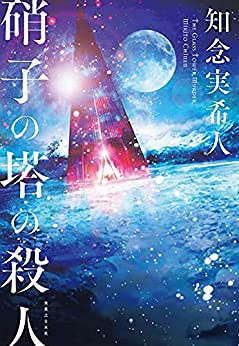


 .
.
 .
.
 But I will say that

 the most important thing of course

 I will say that having read now 17 (!) of this author’s books I do have things flavored a bit by being like ‘oh he always writes this style of character’ or ‘man he loves using this phrase’ I still think this is such a fun plot.


