Please follow these rules to avoid inadvertent ネタバレ. If you’re unsure whether something should have a spoiler tag, err on the side of using one.
Any potential spoiler for the current week’s reading need only be covered by a spoiler tag. Predictions and conjecture made by somebody who has not read ahead still falls into this category.
Any potential spoilers for external sources need to be covered by a spoiler tag and include a label (outside of the spoiler tag) of what might be spoiled. These include but are not limited to: other book club picks, other books, games, movies, anime, etc. I recommend also tagging the severity of the spoiler (for example, I may still look at minor spoilers for something that I don’t intend to read soon).
Any information from later in the book than the current week’s reading (including trigger warnings that haven’t yet manifested) needs to be hidden by spoiler tags and labeled as coming from later sections.
Instructions for Spoiler Tags
Click the cog above the text box and use either the “Hide Details” or “Blur Spoiler” options. The text which says “This text will be hidden” should be replaced with what you are wishing to write. In the case of “Hide Details”, the section in the brackets that is labelled “Summary” can be replaced with whatever you like also (i.e, [details=”Chapter 1, Pg. 1”]).
Hide Details results in the dropdown box like below:
Example
This is an example of the “Hide Details” option.
The “Blur Spoiler” option will simply blur the text it surrounds.
I’m listening to the audiobook.jp version. It’s pretty fun! Especially with all the characters having multiple narrators is very useful.
I think this might be the first audiobook I listen to in Japanese that I don’t also have the text to read along with, or after or before listening. It’s going surprisingly well! I listened to the prologue twice, but after that I don’t think I missed anything major.
I’d originally planned to listen to all the section twice (the first day for example has 7 parts in the audiobook), but I got so into what I was doing while listening that I forgot all about it.
Only problem with just listening I have is that I have no idea whereabouts I’m at with regard to the book. I think I’m about halfway through day 1? Read at your own risk, here come spoilers! (I’m right at that point where everyone’s in front of the closed door waiting for the spare key.)
Spoilers blurred
This is one of those mysteries where you know who dunnit right from the start - okay, I don’t hate that. I figured we’d then follow along and slowly untangle the how and why during the course of the book. But no! That all gets made very clear right form the start! That was unexpected.
Of course now I’m expecting there to be yet more to it. Are there more people among those gathered with a motive, and perhaps even a plan to kill the guy? Is he even dead? Will more people die? What led to the prologue scene on top of the tower? How will we fill 500 pages and 17 hours?
This is where I decide to read the summary again. I forgot all about what’s in there, if I even read it before. Okay, so this is just the beginning! Time to settle in for some ‘and then there were none’ vibes, maybe?
Anyway! I don’t think I’ll keep to a schedule here; I like this new habit I’m building of listening to audiobooks while working, and I don’t think I’ve refined that skill to the point of switching between different ones quite yet. I used to only listen with my full attention before. I will be following along with the discussion though and commenting when I can.
Do they read the chapter names or sections out loud?
If not maybe it would help if I wrote the last sentences or each section?
Seeing as we are not stopping mid chapter / section, that could maybe help
Ah nevermind
But good that you’re enjoying! Have fun!
Sorry! They do read the chapter titles, but I’m not so confident I’ll always pick up on just numbers. I think I’m still in the first part of the chapter, but yeah… I’ll try to pay attention to that going forward.
Yay, I’m done with this weeks reading. The sentence structure is easy enough to grasp, but the amount of new words was quite high for me. I hope the pressure lessens in 3 weeks, when I have to work again..
Some of my thoughts. First the setup
It feels really clichè with an old wealthy eccentric guy having people over for a party and somebody dies. Im still waiting on the mystery. For now everything feels really straight forward and except for 神津島 getting the phone and the chaos that ensues afterwards it was close to boring to read for me.
Im not sure why he needs a maid and a buttler? I mean for a party that’s all right, but do you really need two people to look after you. On normal days without guests over? Can’t understand rich people .
When I’m on the topic about not understanding
Japanese people and their indirect communication. Instead of appealing to him with his personal connection to his sister, he talks only generally about doing the right thing with the new drug. And only AFTER he fucking poisens him, he tells him about his sister. Wtf japanese people… learn to communicate better. I don’t think it would have made a difference given 神津島s character. But still… I hate bad communication
Two places where I struggled with the japanese, if somebody wants to help me
P58
ダイイングメッセージを遺さなくては と とっさに思いつき
Is that to quoting the incomplete sentence fragment that he must leave a message?
Wait I though we were reading the full 一日目 but I just realized that it’s super long and I’m not even close. I hope the page number it shows is accurate (it tells me I’m on 56 currently), but I think having the last sentence as a double check could be useful.
They again I would understand if you don’t want to risk spoiling yourself.
Yeah thanks for that dear author… I can’t tell you how long time it took me to scroll through the book to find all the sections and write their positions… I ended up doing it with Ctrl + F and searching for 1, 2, 3, … because I kept coming across say section 4 but I had missed section 2 and 3
I only have the audiobook and so can only guess from context of knowing the story (since I can’t go back and look at full sentences + surrounding context) but yes on question 1, it’s like, suddenly he thought he must leave a dying message and for the later I’d say yes but but figure some other examples of 食せば might help incase I’m not fully following Grabbing examples from Massif, I「これはどうやって食せばいいのでしょうか?」(~What is a good way to eat this?/How can I eat this?) or 「スキルの高い者を食せば、俺のスキルが上がる。」(~If I eat those with high skills, my own skills will improve).
As expected it took me most of the afternoon to make it through this. I don’t understand why I’m so slow, I almost never struggle with grammar and on the kindle the vocab lookups are basically instant.
The start felt incredibly derivative (and almost Ready-Player-One-esque with the constant, repeated references to other detective stories) but it was so extreme that I thought that there had to be a twist. I guess the fact that we follow the murderer may be that? It’s basically a Columbo episode from the point of view of the murderer.
What confuses me a lot is that the narration talks about 遊馬 in the third person but sometimes the narrator uses 俺? So is the narrator not 遊馬? Most characters have names that relate to their role, are we supposed to read something in 一条遊馬? Is it a distraction and the murderer is somebody else? Or is the narrator somebody sympathetic to the murderer because they wanted to do the same?
It’s also interesting that the others believe that the motive of the murderer is tied to the big “reveal” even though it has nothing to do with it. I even expected that somebody would propose that he killed himself in such a way as to create something resembling the perfect detective story.
At any rate the author went out of their way to make us sympathetic to the murderer. “Fuck handicapped people, idgaf. I’m not even in it for the money, I just want people to suffer. It’s an ego thing. Also apropos of nothing, I really wish I could experiment on people just like the Nazis did, that seems pretty baller to me.”
I thought the same but then given the personality of the guy, I guess he would have been more likely to fire him on the spot than to yield to his plight.
Honestly I struggle to find a definitive answer but see for instance:
しょく(食)する」の文語形。
But note that apparently it can be read either おす or しょくす, but based on about 5 minutes of going through Google search results it seems that しょくす is the more common one? But jisho only lists おす. But my Android IME converts しょくす without issue, while it doesn’t understand the おす spelling.
Yeah let me think theres. 食べる、食う、食らう、食す、食する、食む
All with the same kanji and basically the same meaning give or take a bit of politeness.
We are not even talking about stuff like 口にする、召し上がる or the myriad of other things one could say it
 Week 1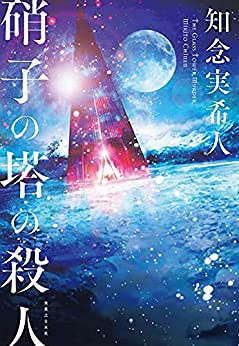


 (I’m right at that point where
  Okay, so this is just the beginning! Time to settle in for some ‘and then there were none’ vibes, maybe?


 .
.


 I’m only at one third myself, so that’s a pretty good pace you got there!
 Grabbing examples from Massif, I「これはどうやって食せばいいのでしょうか?」(~What is a good way to eat this?/How can I eat this?) or 「スキルの高い者を食せば、俺のスキルが上がる。」(~If I eat those with high skills, my own skills will improve).