Hi, I’m new here (A2-level beginner from Germany), nice to meet you all. I’ve been doing WaniKani for three or four months now, and while I’m definitely improving my kanji knowledge, I’m worried that it might not really work outside of the app.
I feel like I recognize kanji when they are presented to me in the size, the typography, and the color-coding of WaniKani, but I still struggle with the same kanjis I’ve already guru’ed once I come across them in textbooks or easy excercises.
Is this a common phenomenon? Any tips on how to transfer the WaniKani knowledge to the outside world WHILE acquiring it?
There were times when I felt this way too, but it passed.
Sometimes I would not recognize a WK kanji immediately in the wild, but then I’d try splitting it into radicals – and a mnemonic would come from memory and I’d recognize the kanji
So, at least in my case, it turned otu to be just a matter of time and practice!
I hope it would turn this way in your case too!
Anyway, best of luck with your studies!
I agree with Trunklayer that it’s probably a matter of time and practice.
When you’ve guru’d a WK item, you will have reviewed it 4-6 times. If you think about how often you use and encounter words while learning your native language as a child, I think it’s fair that 4-6 repetitions of a new word or new kanji will still have the memory be a bit shaky.
I think it’s already a great step that you’re doing other study stuff that has you encounter the kanji outside of WK, since you’ll be making more memories and stronger mental pathways around them.
When you get to the point of being able to incorporate more reading, the overall context will also really help narrow down what it might be.
Different fonts etc can be a challenge, but there are ways of training this. The best one is just to see different fonts. I remember that for some time I used a WK extension that would rotate different fonts to help with this issue. The other option is to just read more with varied fonts. If you have a kanji memorised it does make it easier to recognise even when the font, size, etc are different because you already have the hardest part of that work done, now it’s just training to recognise what can be different and what stays the same
In my opinion, you should expose yourself more to “outside world”. An equivalent phrase in the Japanese language community is “Read more”. Don’t worry about not recognising even known kanji in the wild. Just keep exposing yourself to it. There’s no other way. Happy learning.
Short answer: read easy sentences with the kanjis as vocab to drill them into your mind.
Longer answer
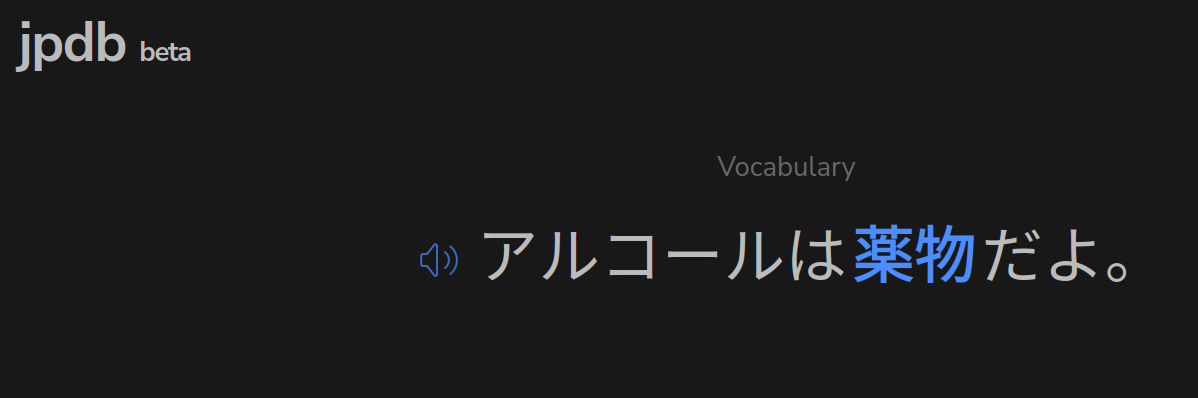
I’d recommend setting up a SRS deck where your read sentences at your grammar level with the kanjis in vocab you learned. I’m partial to jpdb for that but any service that let you have your custom deck / cards / example sentences will work.
I think what you’re describing is indeed a very common and relatable phenomenon that many can empathize with here. WaniKani is an excellent resource for introducing us to a lot of great content, but its biggest strength and weakness is that it does it in an isolated setting. When you have that singular focus and consistency in UI and expectation- you have to put in a lot of effort to carry those skills outside of the comfort zone and it is certainly a unique and prominent challenge.
Ultimately there isn’t an easy or singular answer to fixing this problem other than lots and lots of practice, as vague as that answer is. However, if you keep staying committed and patient- over time it’ll be bound to get easier and easier. I think the community here will have (and has already) provided some great suggestions- but my own personal choice to throw in here is to practice via physical writing. Building muscle memory of stroke order is hugely impactful to recognition and recollection ability. Jisho.org has diagrams and short videos of all the Kanji writings- maybe a little tedious but if you sit down with one at a time and just write until it becomes near second nature, chances are it’ll help a lot when you encounter it later in a sentence or book especially since freehand writing is less rigid than a singular digital font. I don’t personally have any experience or recommendations but I’m sure there are programs and apps dedicated to this out there, too.
Japanese is an immensely difficult, large, and nuanced language to learn so it is by zero means a sign of weakness or inability on your end if you are struggling with something like this- I can attest that I have been (and still am a lot of the time) in a near identical situation. I say that all as to not let it demoralize you or feel too behind. Everything takes time, often a lot of it, but if you’re putting effort into it at all- you’ve got a lot to be proud of and before you know it it’ll start clicking more and more. Keep it up !!
Thank you very much! Both for recognizing the challenge and for reminding me to write more. I started out learning kanji through writing them, and I realize that I have to return to that practice.
Learning Japanese has been a study in patience, and I need to be reminded that that is a reward in itself. I guess!
Thank you! I’ve started getting manga in Japanese and German (my native language) and will make an effort to read side by side and get used to kanji. It already feels great to recognize something from Levels 1-8 every once in a while!
Thank you for putting my learning experience into perspective! It’s been a relief to be reminded of how difficult the process is, I already appreciate the community. Thanks!
Thank you, wow, that’s a great tip. And in additon to “it passed” I will make “Do this a few thousand times and you’re golden” my new motto for learning Japanese.