I learned this this week.
小切手 is bigger than a 切手. And probably more expensive.
I learned this this week.
小切手 is bigger than a 切手. And probably more expensive.
The last thing I learned was that でなくてなんだろう is used to say something is absolutely the case, rather than… the opposite. I understand this is literally, “if it’s not that, then what?” but I don’t know, man, a sentence ending in だろう just… I didn’t realize they could have that vibe.
(There was also a usage of 逆に that seemed a bit unlike the standard one I knew, but I have already forgotten it.  )
)
都道府県・とどうふけん・prefectures of Japan
特色・とくしょく・characteristic, distinctive trait, idiosyncrasy
I found the first of these while looking into why there’s a 道 in 北海道 (Hokkaidō). I mean, the 北海 (northern sea) part makes sense, but it’s not a friggin’ road or street; it’s a big ol’ island!
Turns out that 道 is an administrative unit – translated into English as circuit – formerly used in China and still common in Korea. It was once common in Japan, and also included 東海道, 南海道 and 西海道, but these days 北海道 is the only prefecture to use this suffix.
The 47 prefectures of Japan are made up of 43 県 (“prefectures proper”), two 府 (“urban prefectures”), 1 道 (“circuit”) and 1 metropolis (都), and so collectively they are called 都道府県.
(Mildly amusing that 東京 and 京都, the 都 is the one spelled without a 都.)
This word always reminds me of turducken – presumably a Japanese variant that includes tofu…
I did once make what I guess would be called a … chanbloatfuper (chanterelles, blueberries, oatmeal, tofu and rice paper), as it was during my “make everything out of oatmeal porridge” phase.
(Oh, and for the purpose of the staying on topic, I just came across the word 起業家 (entrepreneur; person who starts their own business) while watching this video.)
天敵・てんてき・natural enemy; natural predator
食物連鎖・しょくもつれんさ・food chain
といった・such as
Came across these words while reading up on the 女郎グモ (both the ぐも and the 妖怪), and it mentioned that the natural enemy of the 女郎グモ, and learned that apparently they are often killed by
例えばスズメやカラスといった虫をよく食べている生き物
(“creatures that often feed on insects, such as hornets and corvids”)
国家機密 こっかきみつ… I thought I misheard but nope, it’s not 秘密.
蒸留所 – distillery
粟・あわ・foxtail millet
五穀・ごこく・the five grains (wheat, rice, beans, foxtail millet (粟) and common millet (黍))
明瞭・めいりょう・clear, distinct, intelligible
連れ子・つれこ/つれご・child from a previous marriage; child of a former spouse; stepchild
The first of these words comes from a book I brought back from Japan, called Japanese Folktales for Language Learners. I found the first story quite easy to read, except for this word (which, coincidentally, showed up right at the start of the second line, presumably just to throw off my confidence/arrogance).
It turns out that 粟 means “foxtail millet”. Now, to be honest, I’m probably not going to remember that it is specifically foxtail millet. Heck, I may not even remember that it means millet, but I think I’ve looked into it enough by now to remember that it is a grain of some kind.
Heck, I’ve known the English word “millet” and the Swedish word “hirs” for most of my life, but I’d forgotten they were the same thing until I looked up 粟.
Coincidentally, I also came across 粟 while reading about 女郎グモ, as it turns out that 女郎花 (おみなえし weren’t expecting that, were ya?) has been used as part of 女房言葉 (“women’s words”) to describe millet or millet dumplings. This is apparently because the primary referent of this word, golden lace (or Patrinia scabiosifolia), has flowers that look kind of like foxtail m
Interestingly, for those of you familiar with the story of Cangjie, the legendary inventor of hanzi/kanji, it appears that the type of millet that fell from the sky in his legend was 粟. The Japanese Wikipedia article cites the Huainanzi as saying:
蒼頡が文字を作ったとき、天は粟を降らせ、鬼は夜に泣いた
When Cangjie has created the characters, the sky rained millet, and the ghosts cried into the night
While looking into 粟, I saw it described as one of the 五穀 (five grains), which is apparently a thing in both China and Japan. Exactly what the five grains are varies with time and location, but going off of Japanese Wikipedia:
| Modern | 米 | 麦 | 粟 | 豆 | 黍 |
|---|---|---|---|---|---|
| Kojiki | 稲 | 麦 | 粟 | 大豆 | 小豆 |
| Nihon Shoki | 稲 | 麦 | 粟 | 稗 | 豆 |
I came across the word 明瞭 while trying to identify the font I’d used in an image. It was mostly sans serif, with the notable exception of the letter I (upper-case I), which is useful for writing romanized Klingon (since words like lIlIllI’ don’t just look like a bunch of dominoes).
Going through my fonts in Word, I found that the text matched up nicely with a font called Meiryo. While looking into why I could get this font working in Word but not in GIMP, I found that its name comes from the Japanese word 明瞭 (although it’s spelled メイリオ just to mess with people).
I also found that it was based on Verdana, and after comparisons with the source image, I realized that that was the font I’d used.
While looking into the word 明瞭, I noticed that the 瞭 part was very similar to the 療 in 治療; one uses an eye as its semantic component and the other uses illness, and both seem to use 尞 to denote a reading of 尞.
Indeed, looking into 尞, this seems to be quite a reliable semantic component:
| meaning | on’yomi | example | meaning | |
|---|---|---|---|---|
| 僚 | companion; official |
リョウ | 同僚 | colleague |
| 寮 | dormitory | リョウ | 寮母 | dorm mother |
| 繚 | put on; twist around |
リョウ | 百花繚乱 | a gathering of many beautiful women; simultaneous emergence of many talents |
| 燎 | burn, bonfire | リョウ | 燎原 | agricultural burning |
| 瞭 | clear | リョウ | 一目瞭然 | apparent; obvious; very clear |
| 療 | heal, cure | リョウ | 診療 | diagnosis and treatment |
連れ子 came up while watching an anime music compilation; apparently, there’s an anime called 継母の連れ子が元カノだった (My Stepmom’s Daughter is My Ex). No idea what the anime is like, but I figured it might be a useful word to know (and should be fairly easy to remember; it’s a tag-along child).
Yeah, reading it my first thought was “Oh, a national sec… Wait, isn’t that ‘machine’? So, it’s like … Metal Gear?”
Metal… Gear…?!?
放っておく・ほうっておく・leave something as is; to ignore; to neglect
里親・さとおや・foster parent; (pet) caretaker
里子・さとご・foster child; adopted animal
I’ve started watching 見える子ちゃん. I’ve had the ending theme (WARNING: Loud song intro) on my jogging playlist for a long time, and figured I should check out what it’s all about.
I’m using a site that allows you to click on subtitles to see an explanation … but I’m not sure I should trust it:
The word 里親 came up in the context of 里親募集; looking for somebody to take in a pet.
I found the construction quite interesting: 里親 ≈ “village parent”
I figured it was because the foster parent was normally somebody from the same comunity – a parent from the village, so to speak.
However, looking around a bit, it seems the more common explanation is that 里親 is simply the natural counterpart to an older word, 里子 (“village child”). Supposedly, back in the day, a child without parents would be considered a shared responsibility for the whole village.
I’m not sure how accurate that etymology is, but it works well enough for mnemonic purposes.
It’s just like one of my Japanese animes!
(Also, My Japanese animes happens to be the name of my aforementioned jogging playlist.)
便秘… if you know you know
馳走 ー(ごちそうさまでしたの「ちそう」)
Etymology is interesting. Characters are ‘run. run’, so was curious how it became ‘thanks for the meal’. Basically something like ‘run-run’ = ‘running around to prepare for something (eg a feast)’ = ‘a great meal’.
if 便秘 is constipation, that implies that diarrhea is 便明
丿乀 - へつほつ
Reminds me of 彳亍 looking like 行 but this time for 八
Add it to the list of things that look fake but somehow aren’t.
したたか・tough, resilient, determined, tenacious
チンケ・low; uncool; petty; the worst
詐欺・さぎ・scam; fraud; grift; swindle
足を洗う・あしをあらう・to quite (a shady business); to turn over a new leaf; to wash one’s hands (or, more literally, feet) of
話を逸らす・はなしをそらす・to change the subject; to digress
見くびる・みくびる・to belittle; to diminish; to look down on
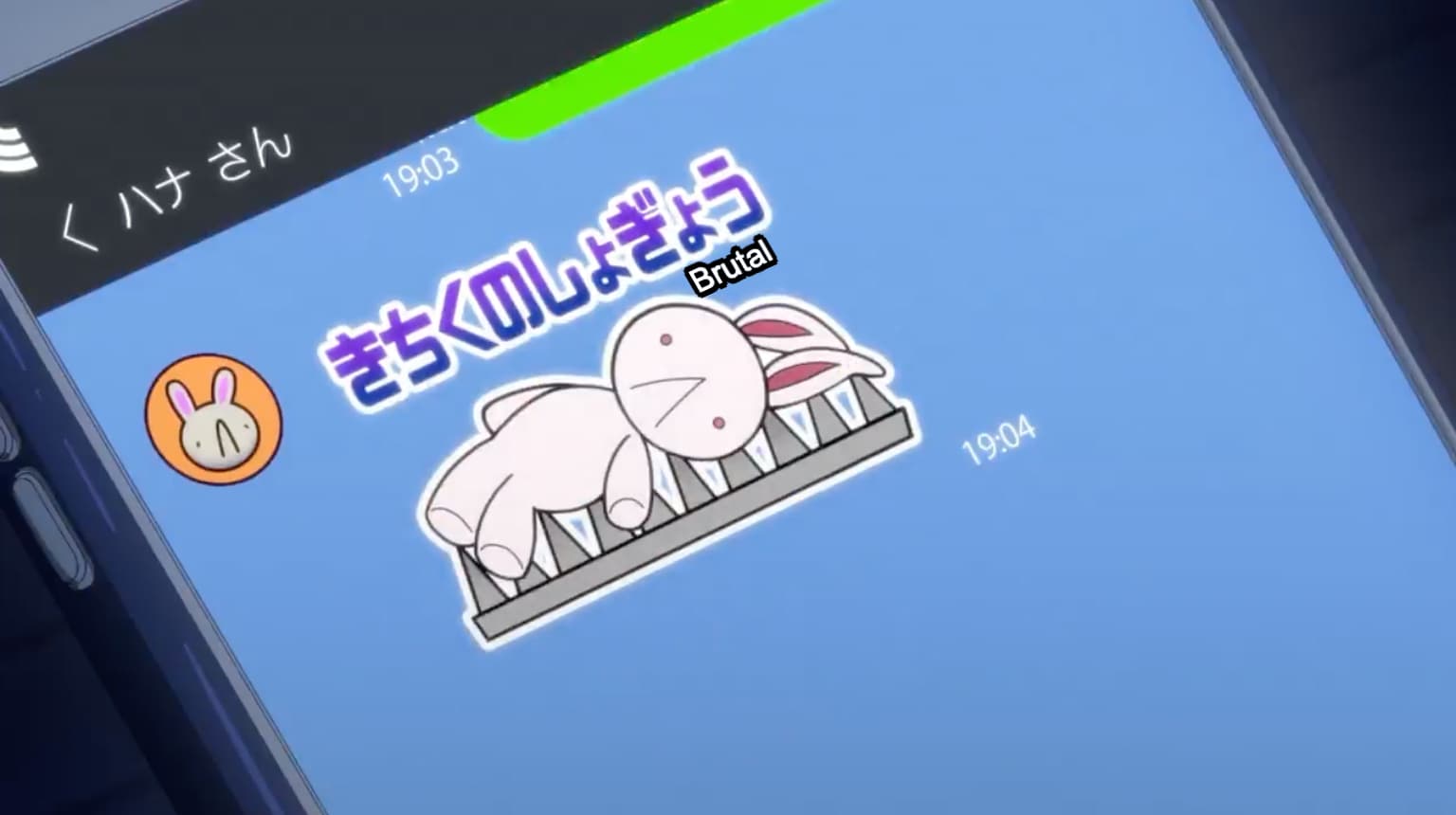
鬼畜・きちく・1) demon and beast; 2) brutal (の-adj.); 3) a monstrously cruel person
厳か・おごそか・solemn (ceremony, atmosphere, etc.); majestic; dignified; impressive
Quite a lot of words on today’s list. Of course, I wouldn’t say I’ve truly “learned” all of them; I’ve just created a spot for them in my list of words I’d like to remember.
Again, these words come from watching Mieruko-chan (which I’m quite enjoying, in spite of the somewhat distracting fan service).
The words チンケ and 詐欺 come from the sentence:
チンケな詐欺師は今日で終わりだよ!
As of today, I’m done being a lowly swindler.
I wasn’t sure I’d remember 詐欺, so I figured I’d take some inspiration from that AI art thread and make some mnemonic image. Since I associate it with an old hag-type character, I figured I’d ask Stable Diffusion for images of an old hag selling soggy bread.
Unfortunately, the results weren’t great.
Anyhow, that was yesterday, and I still remembered both チンケ and 詐欺師, so I guess I’m off to at least a decent start.
鬼畜 stuck out to me, because it is apparently formed as an abbreviated compound of two words I rather like: 餓鬼 (hungry ghost (original meaning); brat and 畜生 (beast (original meaning); general curse word).
Japanese Wikipedia has an article on 鬼畜, describing it as a word for a person who commits acts so vile, they are barely considered human (compare with “monster” in English).
厳か was used as an exclamation when the characters went to a spacious, well-maintained shrine.
Since I quite enjoy going to shrines in Japan, this word might come in handy.
That is indeed interesting; I haven’t thought about the meaning before. I guess it’s similar to おつかれさまでした; the “thank you” isn’t explicitly stated, but it is clearly implied.
And the Guinness book of world records for “jukugo with the lowest stroke count”
括弧・かっこ・bracket(s); parentheses (often spelled using kana)
柄・がら・print (i.e. jaguar print)
おはよう靴下・おはようくつした・a sock where a hole has opened up for one of the toes
I’ve started watching Zombieland Saga, which is about a bunch of girls brought back from the dead in order to form an idol band to revitalize Saga Prefecture (which neatly sums up why I love anime).
At one place, a character refers to the band as デス娘(仮). I recognize 仮, but I could swear the character was saying “かこがり”.
After looking in vain for alternate readings of 仮, I realized my mistake was in not reading the parentheses out loud: かっこ・仮
(I’m not sure if the character really said がり. It could be a rendaku thing, or a Saga dialect thing … but my money’s on my poor listening comprehension.)
I learned 柄 from Miku-sensei’s Osaka dialect video, where she wears a 豹柄 shirt in order to appear as an 大阪のおばちゃん.
おはよう靴下 comes from a book about Sendai-ben. Here is a video on the subject, and here is another one from NHK.
Probably not super useful, but might get a few chuckles and calls of “詳しい” the next time I’m in town.
… or, at the very least, it’ll get a few chuckles out of me; discovering a new おはよう靴下 is usually something that causes me to let out a small groan, but the next time it happens, I’ll just say おはよう.
痙攣 (けいれん) - cramps