Written versus Spoken Dialogue
As a child, I always wondered why my mother pronounced “wash” as “worsh” when there’s no “r” in the word.
The English language has many dialects, but the way we spell words is standardized (apart from regional differences, such as “color” vs “colour”). Fictional works, such as comics, may bend the rules on spelling to convey how a character speaks, such as using “didja” rather than “did you”.
It’s considered a faux pas to do this heavily, so it’s often used sparingly, just enough to help the reader establish the character’s voice.


Apart from that, if a character speaking plain English would naturally say “didja” and “wouldja”, it’s written out as “did you” and “would you”, keeping most dialogue in line with that sterile standardized spelling. Great stuff for anyone learning English through reading American newspaper comics.
In manga, words tend to always be written as they are spoken. If a character is saying 帰るの, but the “r” and “n” sounds combine into 帰んの, the latter is how it’s written.
Don’t get too caught up on learning all the contractions and slurred ways some characters speak. Focus on learning the base vocabulary words and grammar first. (Ask in the weekly threads if you’re uncertain what someone is saying!)
Once you have the basics down, you’ll be better equipped to recognize non-standard spellings as you encounter them more frequently with increased reading.
That said, here’s a bit of what to expect to see. All screenshots are from other manga, to avoid spoilers.
帰んの
This is a combination of the verb かえる (to return) and the explanatory の.


It’s common for ◯◯るの to become ◯◯んの in manga.
じゃね
A form of じゃない (isn’t), often used by coarse or blunt male characters. Typically written as じゃねぇ or じゃねー.
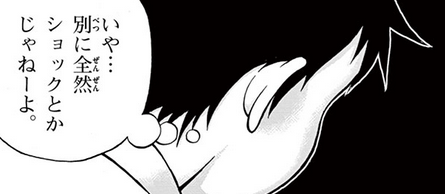


This ◯◯ない to ◯◯ね(え) comes up a lot in this volume, so this is one to keep an eye out for!
そりゃ
Commonly used for それは.


