I agree. Aside from a few kanji where the on’yomi is pretty much never used , it is far better to associate the “reading” to the on’yomi than the kun’yomi.
I hate whenever WK expects a kun’yomi when there’s a perfectly good on’yomi available. The whole point of learning a primary reading is to be able to take educated guesses when encountering words I don’t know.
But with kun’yomi, especially okurigana readings, those are used for a limited amount of vocabularies that are much easier to learn directly with the vocab.
The ‘reading’ should be for compound words, not okurigana words. Because those are the types of words where making an educated guess is useful.
I can somewhat accept 北 being taught as きた, as it isn’t okurigana and is used in a lot of compound words. But having it 明 as the あ in 明かり is so unbelievably dumb that if such changes keep happening, I won’t be able to recommend WK in good conscience. Whoever on the team decided this was a good decision should honestly just take a really long vacation. It’s that bad of a decision that clearly they’re not thinking right and need a break.
To explain with an example,
This is the full listing for 明, the あ reading is for -k based okurigana (明かり、明ける、明かす) and their conjugations (明いた).

So if I see a compound word that actually uses the あ reading like this
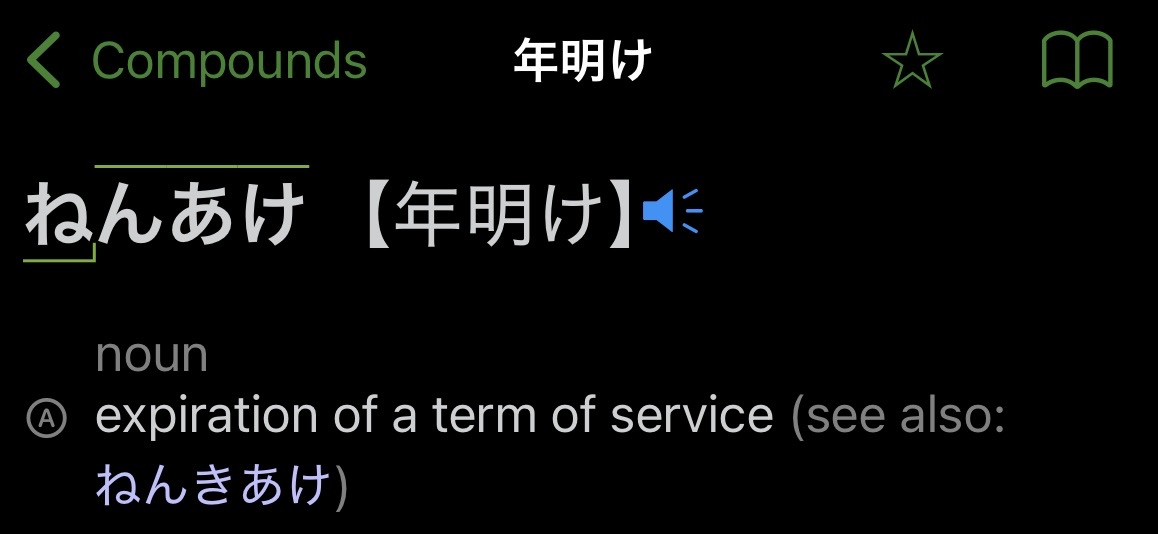
The reason I know it’s an あ reading is because of the very obvious okurigana け
Same with 明け方, or 明くる年, there is no guessing needed, the okurigana for the basic vocab gives it away.
So the only time I would need the kanji reading to help would be for compound words with no okurigana like 明文化. And since あ is an okurigana only reading, then it’s mostly pointless to guess あ. It’ll either be めい or みょう most of the time - especially めい.